Member Spotlight
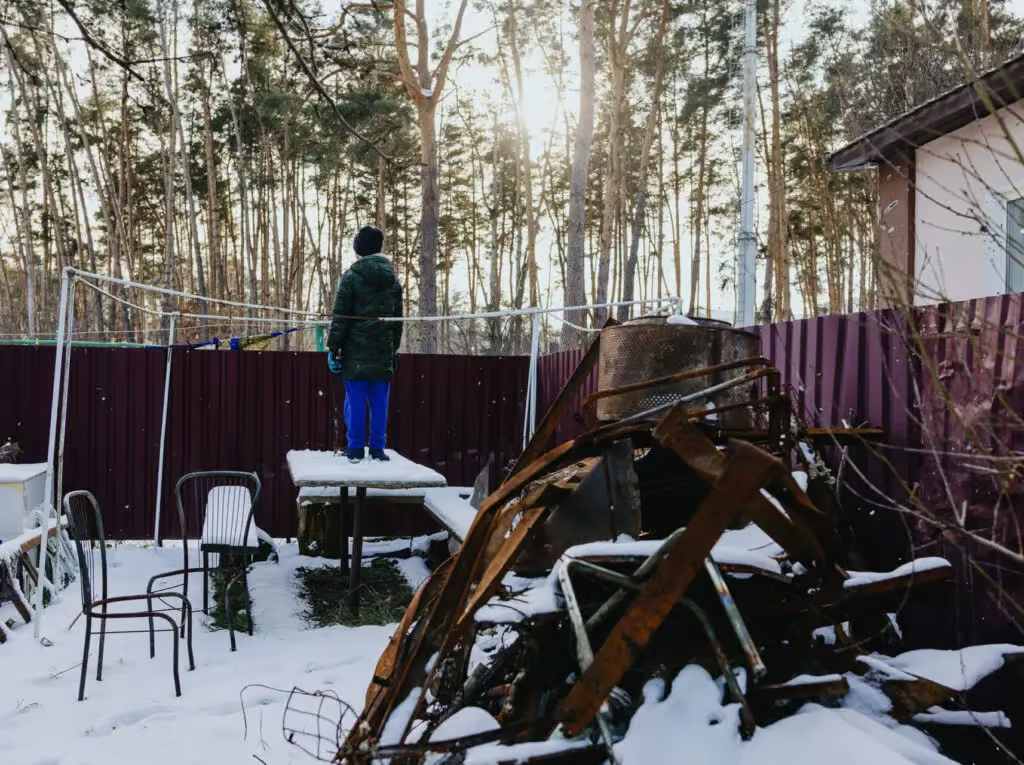
Biting cold, years of school closures, and the constant threat of war continue to shape daily life for children in Ukraine—creating what many describe as an emergency within an emergency. Despite these escalating challenges, our members WeWorld and ChildFund Deutschland are working to ensure children can access safe spaces that, wherever possible, provide continuity of

In Madagascar, many children grow up in environments marked by violence and extreme vulnerability. According to UNICEF, nearly 90% of children report having experienced abuse within their own families, and more than half have faced violence at school. These challenges are compounded by child labour, school dropout, chronic poverty and recurring natural disasters. In the

In December 2025, representatives of the ChildFund Alliance, consisting of staff from members, Educo and ChildFund International joined delegates from 196 countries and the European Union at the twenty-third session of the Committee for the Review of the Implementation of the Convention (CRIC23) of the United Nations Convention to Combat Desertification (UNCCD), held in Panama

Food insecurity remains a critical challenge in Madagascar. One in three households is affected, and much of the population lacks access to sufficient food in both quantity and nutritional quality. Nearly half of all children (47%) suffer from chronic malnutrition, placing Madagascar fourth globally for this condition. Chronic malnutrition increases the risk of mortality and
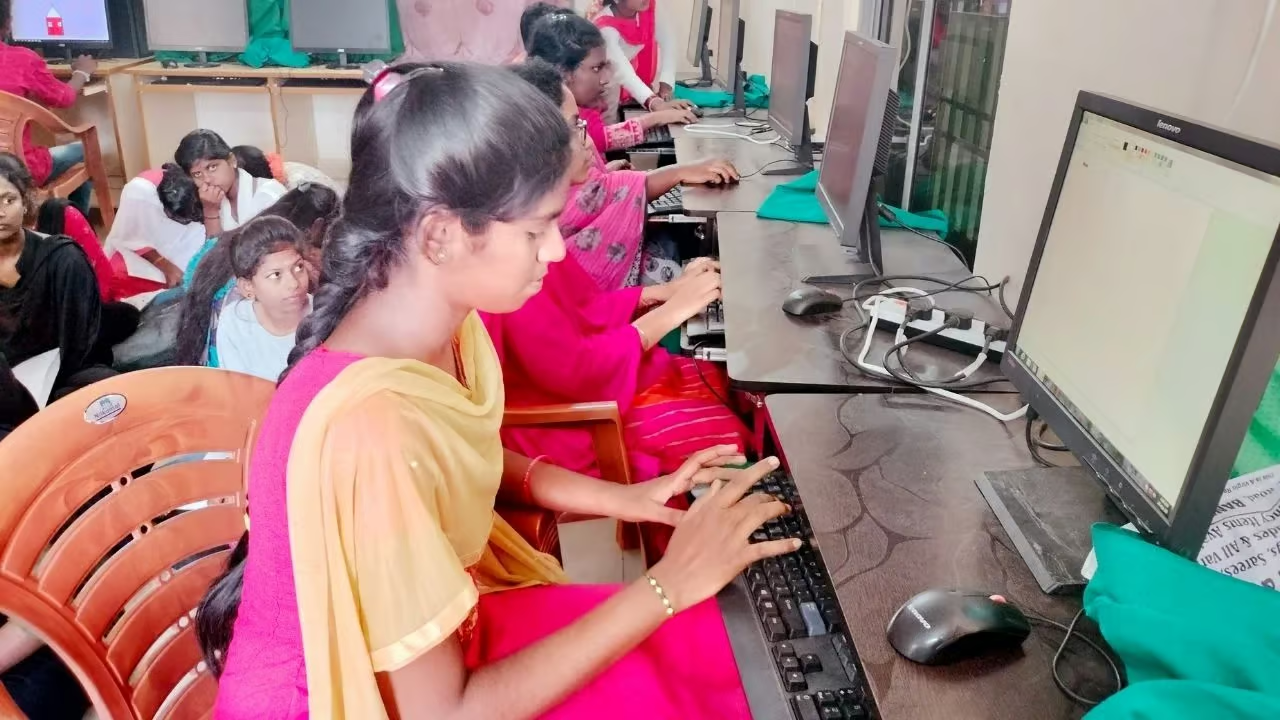
Child marriage has long been a devastating reality for girls in parts of rural India. In one remote tribal hamlet in Andhra Pradesh, girls as young as 13 were routinely married — not because families wished to harm them, but because harmful norms, poverty, and gender inequality left them with few alternatives. For generations, girls
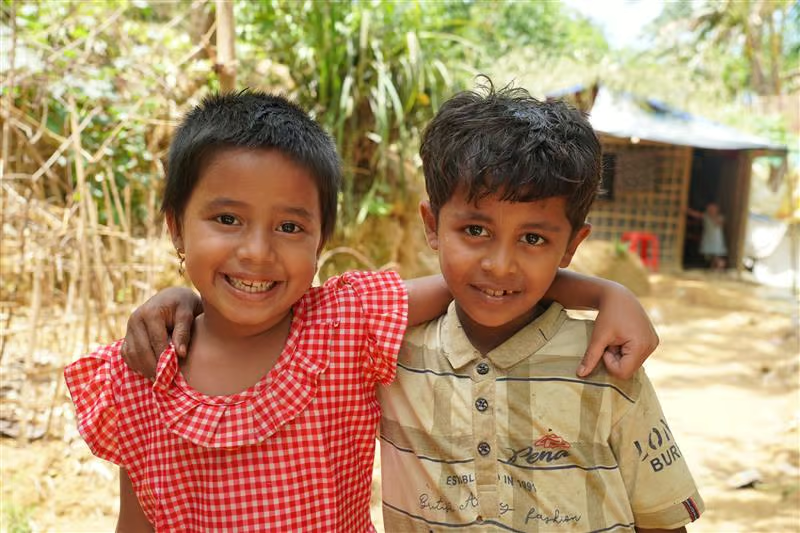
Following her recent remarks at the UN General Assembly’s 2025 High-level Conference on the Situation of Rohingya Muslims and Other Minorities in Myanmar, Sumi A. Shewly reflects on the ongoing humanitarian crisis in Cox’s Bazar and Educo’s work to protect and empower children and families caught in protracted displacement. Once home to nearly three million

Young people gathered at a ChildFund Alliance hosted event to highlight the importance of youth and community-led climate solutions in driving Africa’s green transition. Listening and acting on their ideas is critical to building a greener, more resilient Africa that leaves no one behind. Although Ethiopia was nearing the end of its rainy season, last
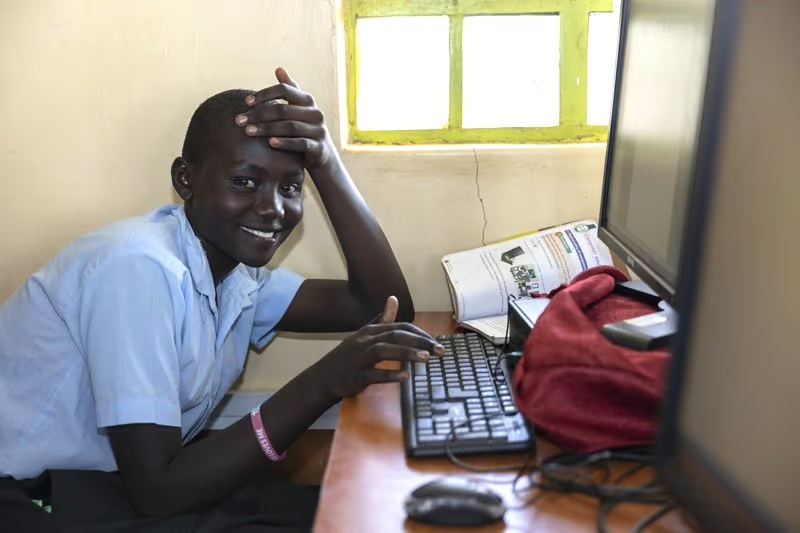
Janet, a 23-year-old from Kasarani, Kenya, knows all too well how it feels to be unemployed and feel uncertain about her future. “I spent two years jobless,” she says. “Now, I’m offering social media services to local businesses.” What changed? Janet enrolled in the Ajira Digital Skills Training Program, spearheaded by Kenya’s Ministry of Information,

Haiti has endured decades of political and economic instability, culminating in a surge of gang violence across the country in early 2024, which is yet to abate. This cycle of violence and institutional collapse has triggered a severe humanitarian crisis, with children among its most affected victims. This worsening humanitarian crisis presents a constant and
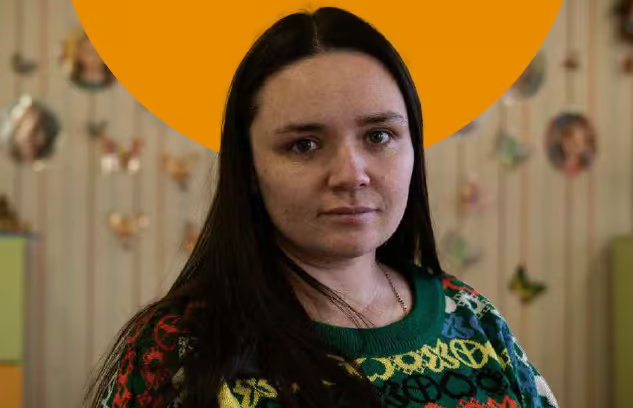
WeWorld’s new report outlines how humanitarian programming can confront deep-rooted gender disparities and strengthen long-term resilience. The ongoing, mass-scale invasion of Ukraine has triggered one of the most complex and rapidly evolving humanitarian crises in recent history. In this volatile and high-stakes context, working in the humanitarian sector demands more than the provision of basic