
In Madagascar, many children grow up in environments marked by violence and extreme vulnerability. According to UNICEF, nearly 90% of children report having experienced abuse within their own families, and more than half have faced violence at school. These challenges are compounded by child labour, school dropout, chronic poverty and recurring natural disasters.
In the Analamanga region, only 46% of children attend secondary school, and child protection services are almost non-existent. As a result, many children are unaware of their rights and are unable to claim or defend them.
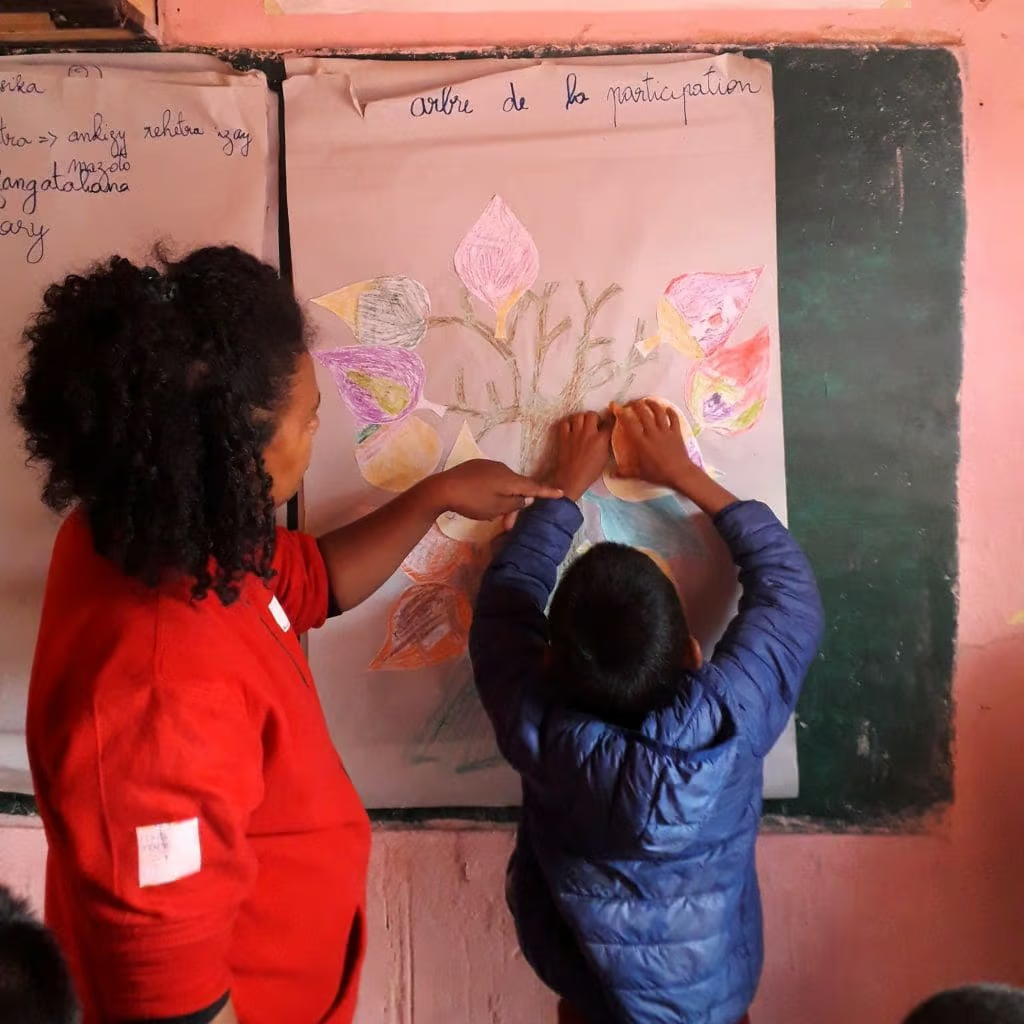
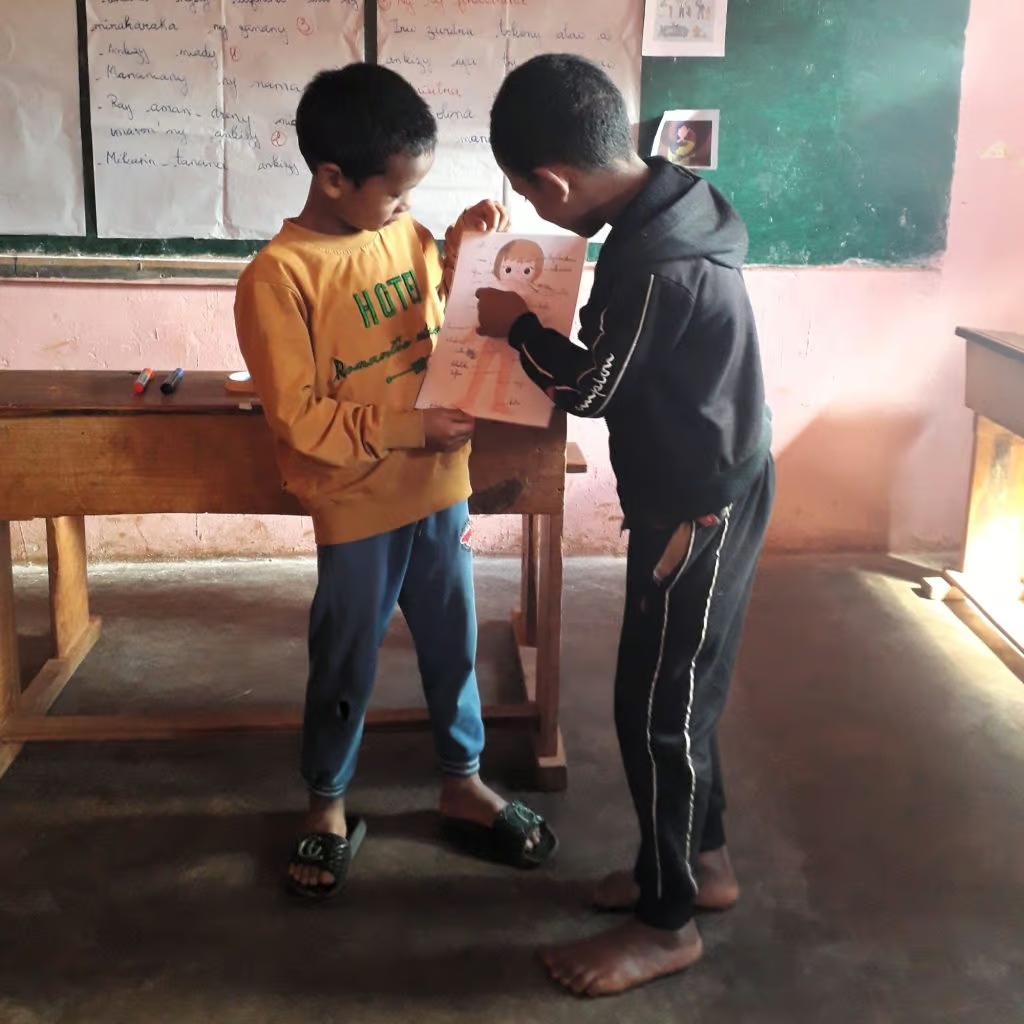
To address this urgent situation, Un Enfant par la Main (UEPLM) launched the Children’s Rights Clubs initiative in 2021, in partnership with rural schools. These clubs are safe and inclusive spaces where children aged 8 to 12 can learn about their rights, identify forms of abuse, and become active agents of change in their schools and communities.
The project begins by engaging school leadership and training volunteer teachers on child rights, non-violent communication, and their role as club facilitators. Large-scale awareness sessions are then held in schools, where children explore their rights through interactive and creative activities. At the end of these sessions, club members are elected from among the volunteer students.
From awareness to action
Each Children’s Rights Club brings together around twenty children, with equal representation of girls and boys. Supported by an educator from the Association Enfants Antananarivo (UEPLM’s technical partner for child protection activities) and two trained teachers, the clubs meet twice a month outside regular school hours.
During each session, children discuss topics such as child protection, gender equality, cooperation, environmental issues and leadership. Together, they reflect, share experiences and design concrete actions to promote children’s rights within their schools and wider communities.
The clubs also serve as powerful platforms for creativity and civic engagement. Children write poems, compose songs, create posters and produce theatre pieces inspired by their lived experiences and the rights they wish to defend. These creations are shared during public events such as Children’s Month and World Children’s Day, helping to raise awareness among families and community members.
Through this initiative, Un Enfant par la Main aims to build a protective and empowering environment for every child—one where children are not only protected, but also heard and supported. A child who knows their rights is better equipped to grow with dignity, confidence and security.

“In the past, when we encountered children in the village, they were very shy and did not always greet us. Today, they approach us and do not hesitate to say hello and engage in conversation, even in public places such as the market or the fields.”
Ms Tanjona, Youth Leader
“My daughter has become more courageous. She dares to speak up, talk to other people, and even share what she knows about the right to food. I was also very surprised by her performance at the community show. I’ve never seen her like that before.”
Mother of Sariaka, club member
“I used to be very shy. Now I talk more with my parents and I’m not so embarrassed anymore. I loved the sessions because we sang and played with the ‘zoky’. It made me more serious about doing things well.”
Iantso, child club member
A child rights-based approach
The Children’s Rights Clubs are a concrete example of a Child Rights-Based Approach (CRBA). On the one hand, they empower children—who are rights-holders—to understand and assert their rights. On the other, they raise awareness among duty-bearers such as families, teachers, local authorities and civil society, encouraging them to fulfil their responsibilities to protect and promote children’s rights.
The project also incorporates Child-Friendly Accountability methodologies, fostering a culture of transparency and responsibility. By giving children a platform to hold duty-bearers accountable—particularly in efforts to eliminate all forms of violence against children—this participatory approach strengthens local protection systems and supports community-based mechanisms to ensure children’s rights are upheld where they live and learn.