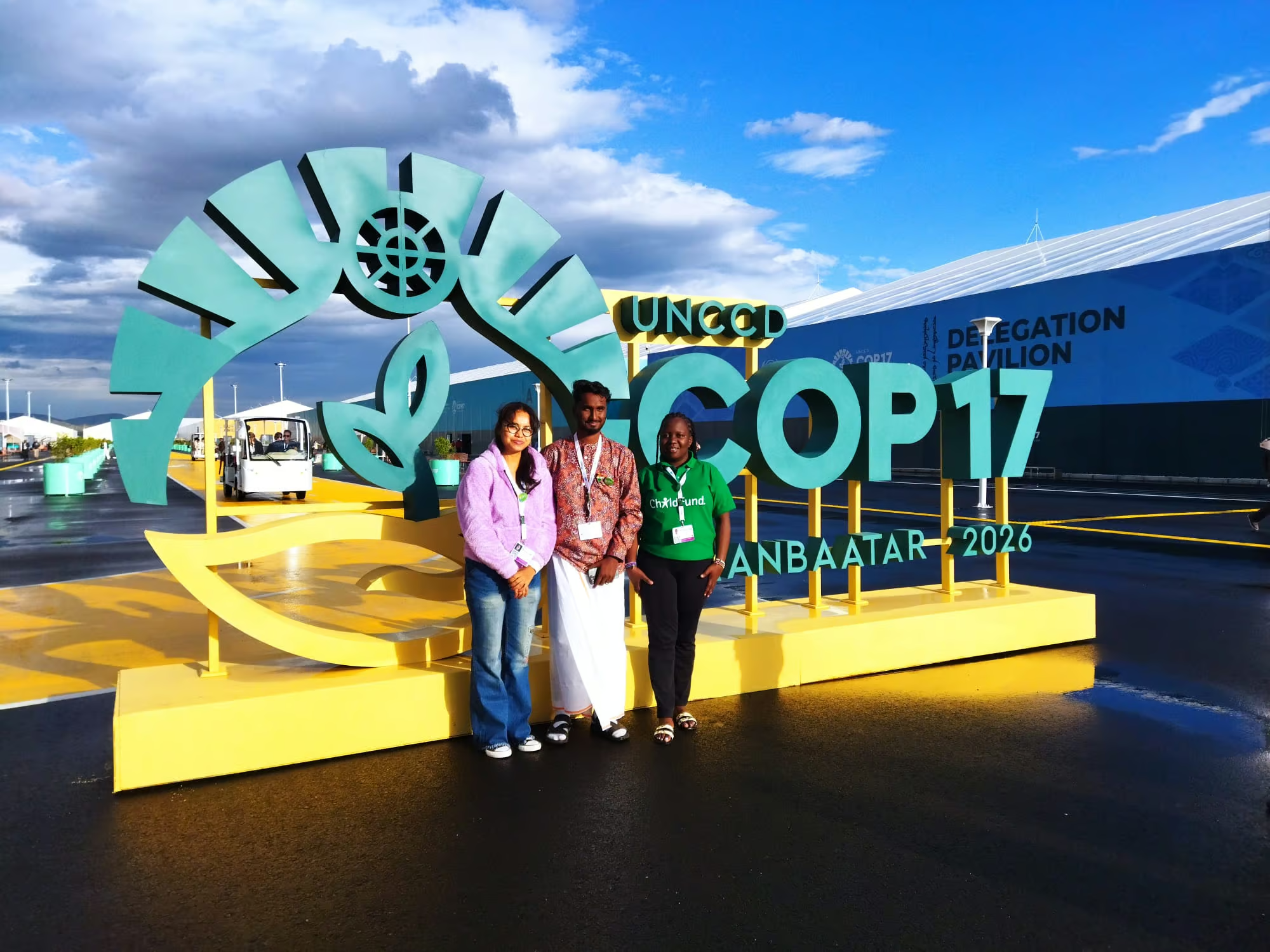
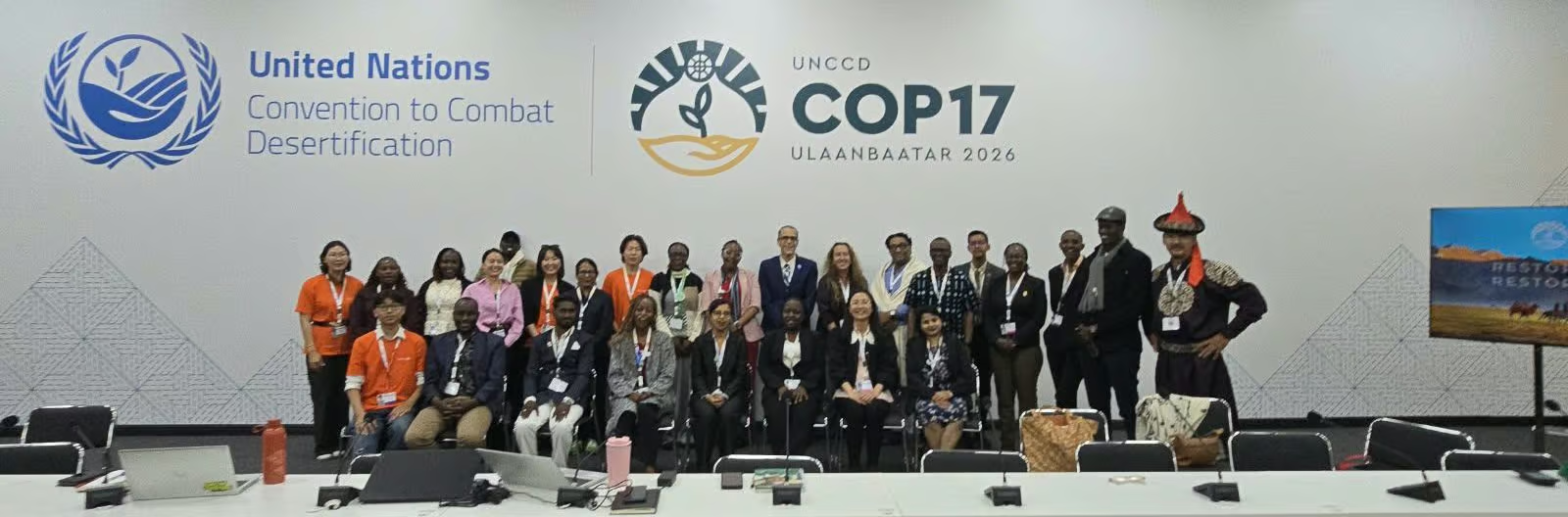
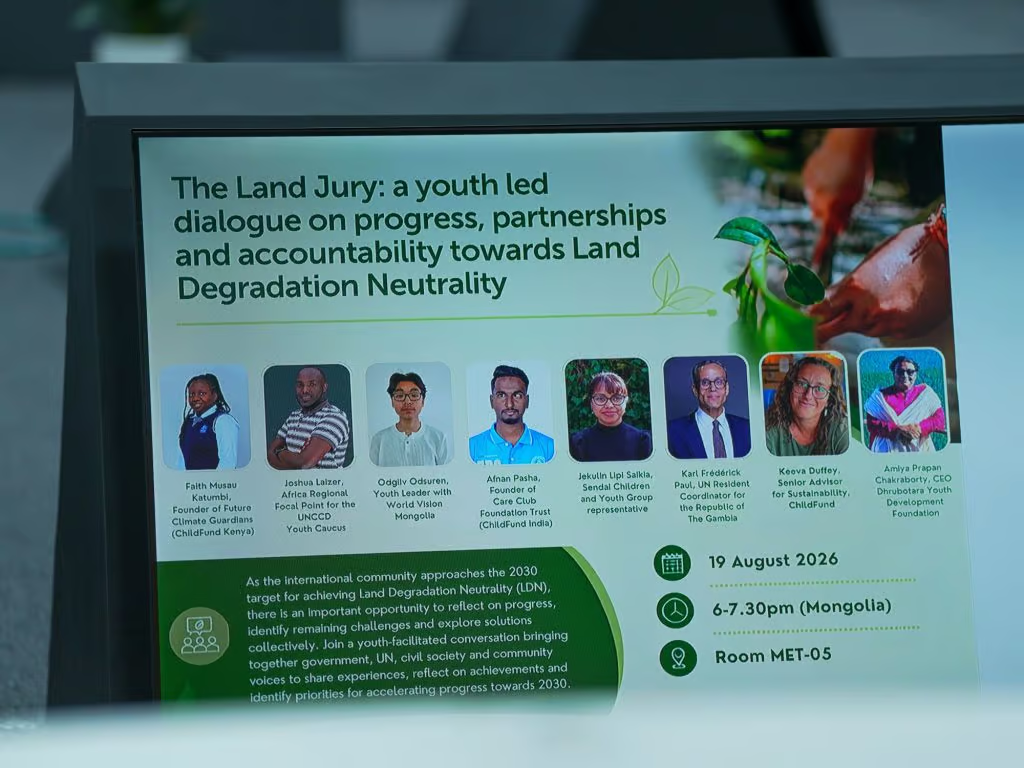
As the only truly youth-led event at COP17, the Land Jury created space for honest dialogue and meaningful intergenerational exchange.
Young people supported by ChildFund Alliance, the UNCCD Youth Caucus, the Sendai Youth Network and Plant-for-the-Planet facilitated a structured discussion with representatives from government, the United Nations, civil society and local communities.
Through a series of guided questions, participants reflected on progress to date, shared practical experiences and lessons, and identified priorities for accelerating action towards the 2030 target. Above all, the Land Jury demonstrated the crucial role young people can play in strengthening accountability, shaping solutions and driving collaboration on land restoration.
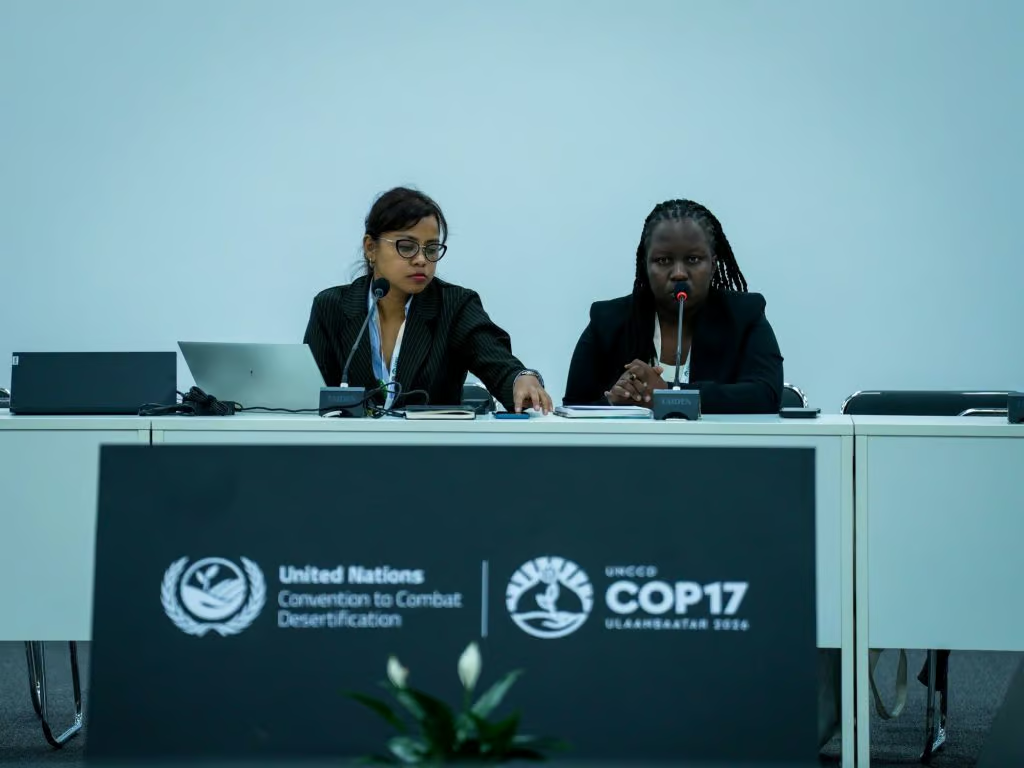
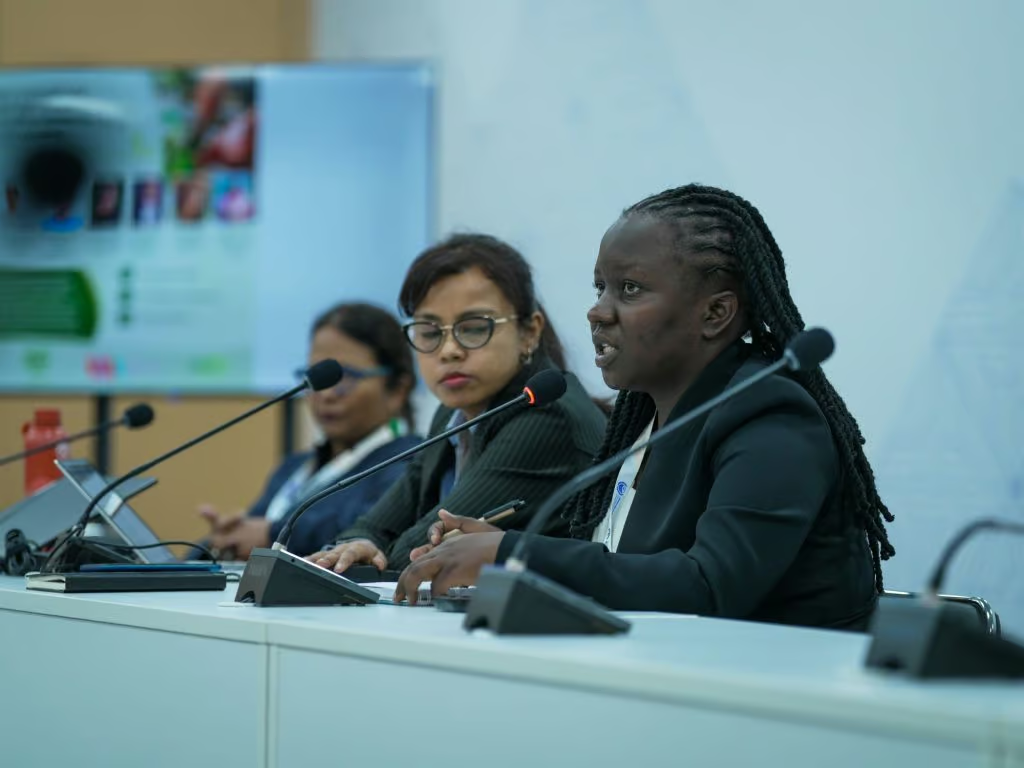
Youth Climate Champion Faith Musau brought together the key messages from the Land Jury in the summary below, capturing the urgency, ambition and determination of young people calling for meaningful action on land restoration.
We also thank Faith Musau, Joshua Laizer, Barkat Matazaky, Odgiiv Odsuren, Afnan Pasha and Jekulin Lipi Saikia for helping lead the Land Jury and creating a powerful space for young people to challenge, contribute and help shape the path forward.
The Verdict from the Land Jury
Authored by Youth Climate Champion, Faith Musau
I have looked at the evidence brought before this Court on the 19th Day of August 2026. As the. We are gathered in Ulaanbaatar for COP17 under the profound mandate of Restoring Land, Restoring Hope. Yet, we find ourselves at a historical crossroads. We are standing at the penultimate conference before our absolute deadline of 2030 to achieve Land Degradation Neutrality.
But let us be completely honest in this room. We are not just here to share stories or deliver traditional, comfortable presentations. We are here to hold power accountable to the law. The global community is failing its statutory obligations and mandate. The ground beneath the feet of our children and we young people is turning into dust, and with it, the futures of over three billion people worldwide.
To ground this verdict in unassailable legal reality, this Court draws direct reference to the text of the United Nations Convention to Combat Desertification :Article 10, Paragraph 2(f)of this provision explicitly dictates that National Action Programmes must provide for effective participation at the local, national, and regional levels of non-governmental organizations and local populations, both women and men, particularly resource users, including farmers and pastoralists and their representative organizations. This law is binding to all party states today here at COP 17 and it demands local, inclusive governance. Excluding the youth who manage these lands is a clear breach of the doctrine of participatory spirit.
Additionally, the UNCCD Youth Engagement Strategy, adopted by the Parties here explicitly recognizes young people not merely as vulnerable onlookers or passive beneficiaries, but as vital agents of change and key stakeholders in global land stewardship. The legal frameworks exist. The mandates have been signed. The promises are written in ink. Yet, the implementation on the ground remains dangerously empty. Then my question goes to the world leaders, negotiators and all national leaders what you have been discussing for so long, yet the laws are binding to all party states who have ratified it. Why can’t we hold the defaulters of the law accountable. This court will no longer tolerate the gap between international policy and local reality.
We have heard testimony today from across the global spectrum from the United Nations, state leadership, civil society, and grassroots organizations. Let us look directly at the evidence and the real-world examples of where the system is breaking down and where youth are stepping up:
- The Crisis of Rangelands and Nomadic Herding: Right here in our host nation of Mongolia, which is the same to many African Countries, over three quarters of the country’s land is actively suffering from degradation. More than half of surveyed pastoralists are completely unaware that their land rights are legally recognized, while a third of local land officers lack the legal training to protect them. When nomadic youth cannot securely manage their pasturelands, our natural defences against catastrophic drought crumble. This is a direct failure to implement the community led protections mandated by Article 10 of the UNCCD convention.
- The Global Drought and Financing Deficit: Across the world, from the drylands of Sub-Saharan Africa to the vulnerable coastlines of Small Island Developing States, a staggering 2 billion hectares of land lie degraded. Experts estimate that we need at least $2.6 trillion in funding by 2030 to restore our soil and build true drought resilience as per the World Bank Report of 2025. Yet, world leaders are caught in endless diplomatic discussions over legally binding drought frameworks because they are worried about costs while approximately 23 hectares (about 57 acres) of fertile land are degraded every single minute due to drought, erosion, and desertification. This totals 12 million hectares of lost productive land globally each year. They calculate the cost of restoration, but they completely ignore the catastrophic cost of starvation that our children pay every single day.
- The Promise of Eco Entrepreneurship: Despite these systemic failures, our youth are proving that they are ready to lead. The UNCCD’s own mandates push for environments that allow young eco and agripreneurs to thrive. Around the globe, youth led restoration projects are transforming barren soils into food forests, proving that young people are not just waiting for a rescue they are the solution and we have had so many examples to give.
Our witnesses have presented an undeniable case for institutional accountability. This court enters their specific findings into the permanent global record. Therefore, let it be known to the international community, the UNCCD Secretariat, and every head of state present at COP17: This Land Jury delivers a definitive, historical verdict of GUILTY against the status quo. Global land restoration strategies are legally, morally, and structurally deficient. They are failing because they completely isolate the world’s youth from the financial and political mechanisms of power. We refuse to accept any more empty diplomatic decorations, tokenistic youth panels, or toothless declarations. We demand that you turn your theoretical land pledges into immediate finance and decisive local action because you have already discussed no need for more discussions.
CALL TO ACTION
To cure these violations and restore global compliance before the 2030 deadline, this court issues five binding directives to all State Parties, UN entities, and international stakeholders present here today:
Enforce a Child Rights and Intergenerational Legal Approach: You must systematically integrate a child-rights perspective directly into all national UNCCD policy frameworks. Ensure that the legal, environmental, and spatial rights of children are non-negotiable pillars of land tenure and restoration laws.
Prioritize Child Nutrition, Food Security, and Rangeland Health: You must tie land restoration policies directly to public health. Prioritize the protection of traditional pastoralist livelihoods and dryland soils. Restoring our rangelands is the only way to secure child nutrition and end the global crisis of climate-induced stunting and hunger.
Institutionalize Meaningful, Accredited Youth Participation: You must eliminate tokenism from global governance. State Parties must guarantee permanent, accredited, and voting seats for children and youth leaders within local, national, and international environmental decision-making bodies.
Fund the Future via Direct, Youth Responsive Financing: We demand a dedicated percentage of the required billions for global land restoration be directly allocated to youth-led organizations, young eco-entrepreneurs, and local communities. Lower the barriers that prevent grassroots youth marginalised communities and indigenous people from accessing climate finance.
Establish High Level Accountability and Anti-Corruption Windows: We call for transparent, open access tracking systems to monitor every dollar pledged for land restoration. Hold governments and private sector actors accountable to ensure that funding directly reaches the communities and young stewards executing the work on the ground.
Treat Land Degradation with True Global Emergency Response: We demand that world leaders treat the loss of our fertile soil with the exact same absolute urgency, funding, and speed that they used to fight the COVID-19 pandemic. When a medical virus threatened humanity, the world did not wait decades to act. Governments instantly changed laws, moved trillions of dollars, and worked across borders overnight because we desperately wanted to save human lives. But this emergency response will only happen when we choose to love our land and nature the exact same way we love our own lives. Just as we instinctively fight, protect, and act with everything we have to prevent the loss of human life, we must now do the exact same for our dying earth. Land degradation is a slow-motion pandemic that is quietly destroying our food, our water, and our children’s future. If we do not love and defend the soil that gives us life, we cannot survive. We must unlock that exact same emergency power right now to heal our earth before it is too late.
Allow me to ask the question again: what have we been discussing for so long, yet our land has been degraded every single minute. We had COP 1 and now we are at COP 17 how many more COPs and discussions do we need to restore our land which is already degraded and continues to be degraded every single minute. The evidence has been laid bare that we need no more discussions we need urgent actions. The law has spoken. The time for delay is over. Let us restore our land, let us restore our hope, and let us do it together.
This Court stands adjourned.
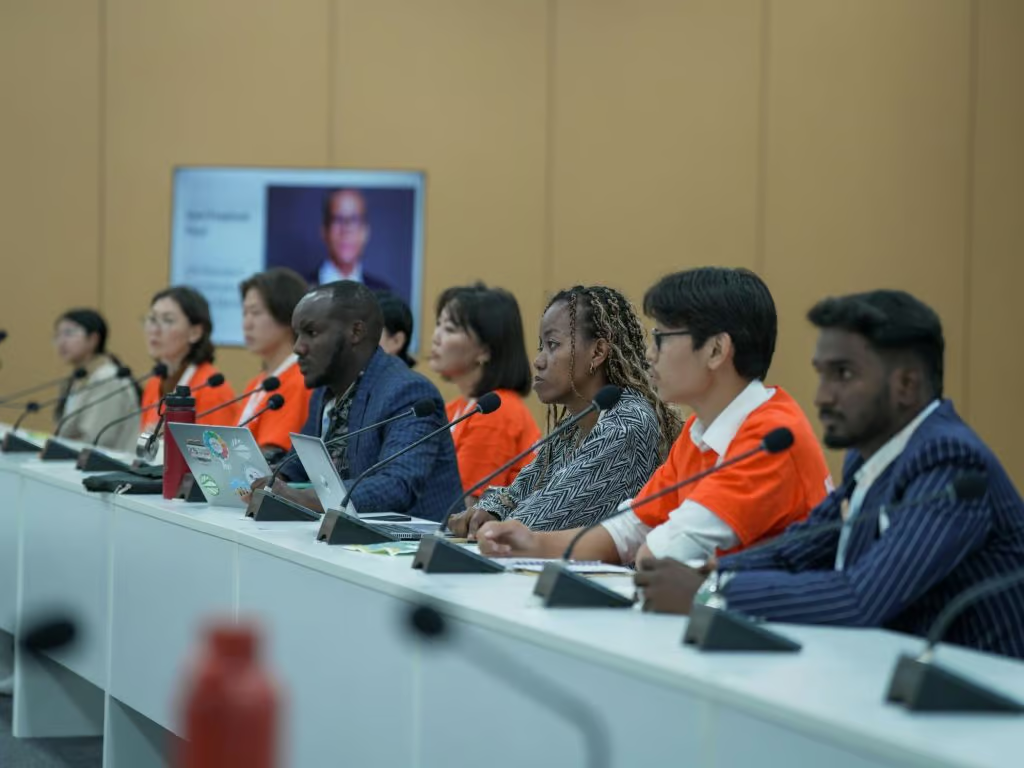

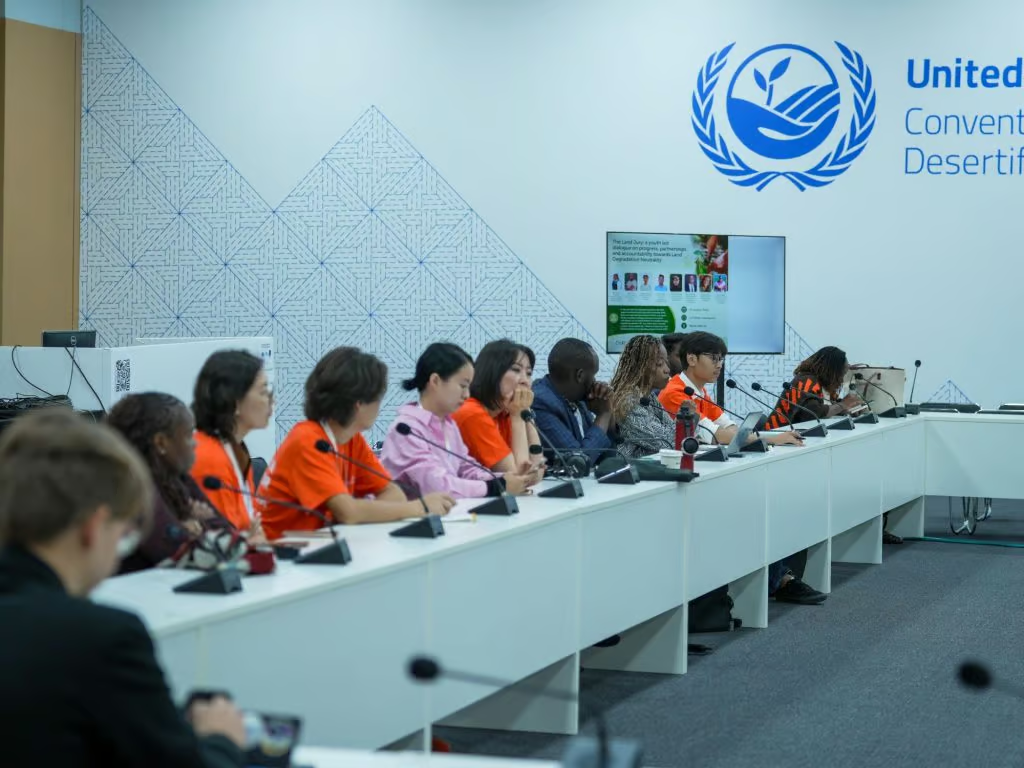
We would like to acknowledge the many partners whose support made this event possible: Barnfonden, ChildFund International, ChildFund Kenya and ChildFund India, together with event partners Plant-for-the-Planet, the Sendai Youth Network and the UNCCD Youth Caucus. The Youth Jury concept was developed by Velma Oseko, Chair of the Alliance Child Rights in a Changing Climate (CRCC) Committee, with contributions from across the ChildFund Alliance and our event partners.
Read the ChildFund Alliance paper: Children’s Rights at UNCCD COP17