
Fifteen years after the start of the conflict, Syria remains one of the world’s most severe and protracted humanitarian crises. Armed conflict, displacement, earthquakes, economic collapse and the destruction of essential infrastructure have left millions of people struggling to meet their basic needs.
Throughout this period, ChildFund Alliance member WeWorld has supported communities across Syria, delivering programmes that have adapted to changing realities — from lifesaving humanitarian assistance during the most acute phases of the conflict, to restoring essential services and helping families rebuild their lives.
A crisis that continues to affect millions
Today, more than 16 million people in Syria are in need of humanitarian assistance, including millions of children. Access to education, safe water, sanitation and livelihoods remains severely constrained, particularly in rural and underserved areas.
Children continue to bear a heavy burden. Around 2.5 million are out of school, and a further 1.6 million are at risk of dropping out. Many are being pushed into child labour as families struggle to survive, while around 40% of schools are inaccessible or no longer operational.
At the same time, large-scale returns and ongoing displacement are placing additional strain on already fragile systems. Many families returning to their communities are finding damaged homes, disrupted services and limited economic opportunities. In many areas, unexploded ordnance also remains a serious threat.
WeWorld’s response in Syria
Since 2011, WeWorld has delivered an integrated response in Syria that combines emergency assistance with longer-term recovery. Today, the organisation has offices in Damascus, Aleppo and Deir-ez-Zor, and delivers programmes in more than 60 communities across four governorates.
Its programmes are focused primarily on rural and underserved areas, where needs are greatest and where strengthening local capacity is essential to sustainable recovery. This long-term presence has been made possible above all by national staff, who have continued supporting communities through some of the most difficult periods of the crisis.
As the context has evolved, so too has the response. While early efforts prioritised access to essential services during active conflict, current programmes also seek to strengthen resilience, restore opportunity and support longer-term recovery.

Supporting education, water and livelihoods
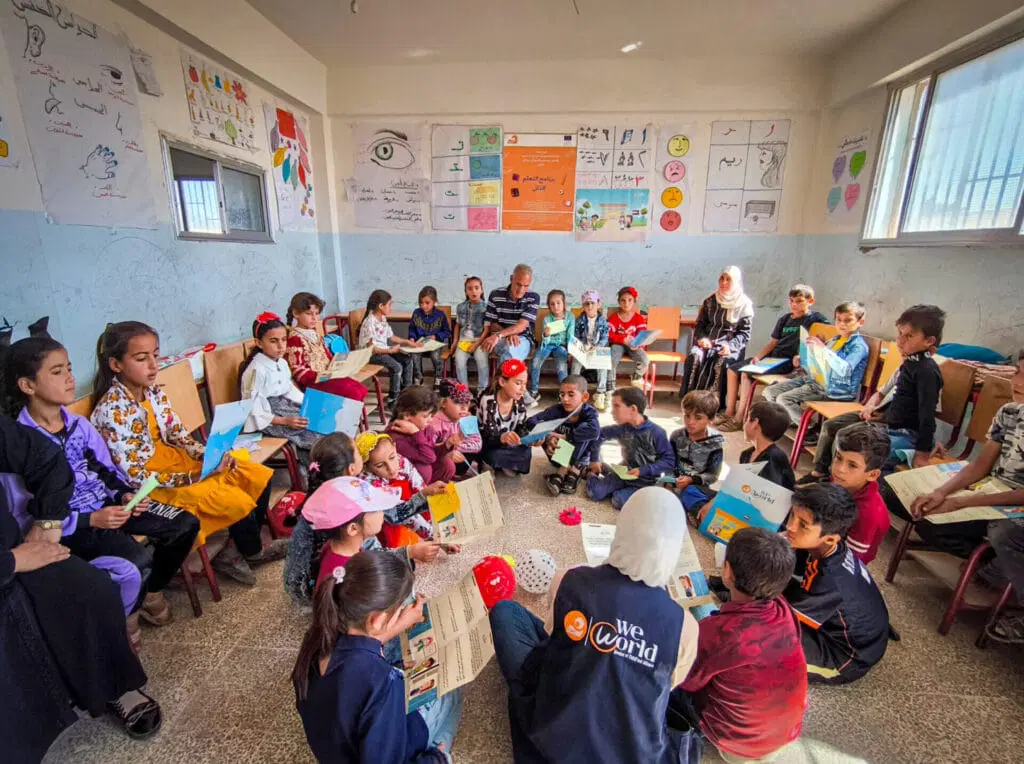
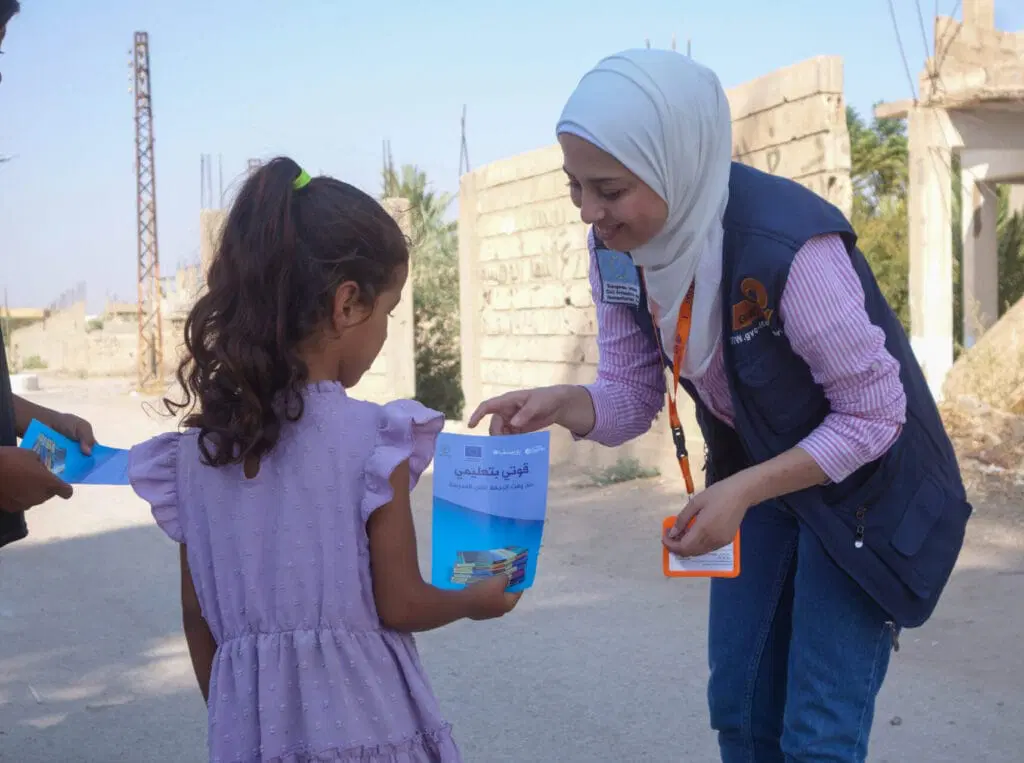
Education remains central to this response. WeWorld helps make schools safer and more inclusive, supports teacher training, and provides non-formal education opportunities to help children remain in or return to learning. This is essential not only for education outcomes, but also for reducing child labour and other protection risks.
WeWorld also supports the rehabilitation and maintenance of water infrastructure to improve access to safe water and sanitation in communities and schools. Hygiene promotion, including menstrual hygiene support, is an important part of these efforts.
To help families rebuild income and stability, WeWorld strengthens vocational training centres, provides equipment and starter kits, and supports connections to labour market opportunities.
Looking ahead
Humanitarian needs in Syria remain immense, but emergency assistance alone is not enough. Continued investment in recovery is also needed — strengthening services, expanding livelihoods and supporting communities to build resilience and greater self-reliance.
Fifteen years on, Syria may no longer dominate international headlines, but for millions of people the crisis is far from over. WeWorld continues to support communities in Syria, helping meet urgent needs today while contributing to a more stable and dignified future.