
Biting cold, years of school closures, and the constant threat of war continue to shape daily life for children in Ukraine—creating what many describe as an emergency within an emergency.
Despite these escalating challenges, our members WeWorld and ChildFund Deutschland are working to ensure children can access safe spaces that, wherever possible, provide continuity of education, play and psychosocial support.
This emergency response is being jointly implemented in collaboration with local partners and supported by members across the ChildFund Alliance, combining local knowledge, technical expertise and collective solidarity to respond to children’s needs in a protracted crisis.
Keeping education and safe spaces operational
“The difficulties in proposing educational projects in Ukraine are enormous,” says Piero Meda, WeWorld Country Director in Ukraine. “We operate in Kyiv, but also in the areas of Kherson, Donetsk and Kharkiv, close to the war front. In the capital, we work with the most vulnerable children—those who have lost parents or family members and are living in institutions or temporary foster homes.”
For these children, often without family support, school becomes more than a place of learning—it becomes a lifeline. “They don’t have parents or grandparents who can help with homework or schoolwork,” Meda explains. “Our role is to provide educational support, but also a space where they can feel safe and play.”
War, winter and the loss of environments for children
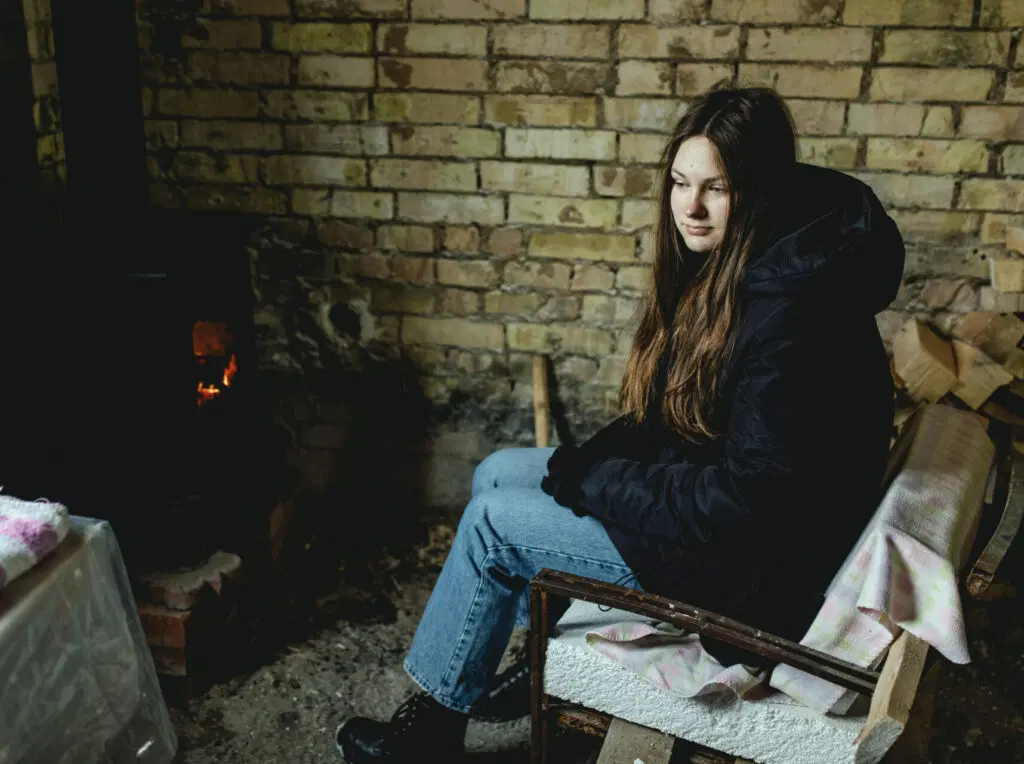
The war, compounded by extreme winter conditions, has further worsened the situation for children and families. “Most schools have been closed since March 2022 because they are too close to the front or do not meet safety criteria,” Meda continues. “During these periods, there is no heating, and temperatures have dropped as low as –17°C.”
Schools and playgrounds—spaces meant to protect children—have not been spared. “Some schools have been used as military targets, and even a playground was struck by a Russian drone in broad daylight,” Meda says. “The consequences for children are evident: they have no safe time or space to be together, to play, or simply meet.”


Addressing trauma and protecting mental wellbeing
The psychological impact of prolonged conflict is visible every day. “We meet mothers—and especially grandmothers—who are desperate as their children become increasingly withdrawn,” Meda explains. “Some boys and girls stop speaking for weeks, shocked by what they have experienced.”
Psychologists, educators and community workers provide structured psychosocial support, using play, routine and education to help children process trauma and begin to rebuild a sense of safety and hope.
A joint response to support children and families
Since the beginning of the war, ChildFund Alliance members have focused on meeting urgent needs while protecting children’s rights and wellbeing. This includes ensuring access to clean drinking water, sanitation and hygiene; distributing hygiene kits and winter supplies, including fuel pellets, blankets and warm clothing; providing financial assistance to families who have lost their homes; delivering psychosocial support, particularly for women and children; and raising awareness of the dangers posed by mines and unexploded ordnance.
In addition, we have activated child-friendly safe spaces, supported foster homes and orphanages, rehabilitated damaged schools and health facilities, and helped restore a measure of stability in deeply disrupted communities.
Defending children’s right to a future
Ultimately, the goal is not only to respond to immediate needs, but to defend children’s right to a future. “Dreaming means being able to imagine a better future—one where children can grow up without fear, choose their own paths, and live in a safe and peaceful country,” Meda reflects.
As the conflict continues, sustained support remains critical to protect children’s safety, wellbeing and future. In an emergency within an emergency, guaranteeing access to education, protection and safe spaces is not optional—it is essential to safeguarding children’s rights today and their opportunities tomorrow.