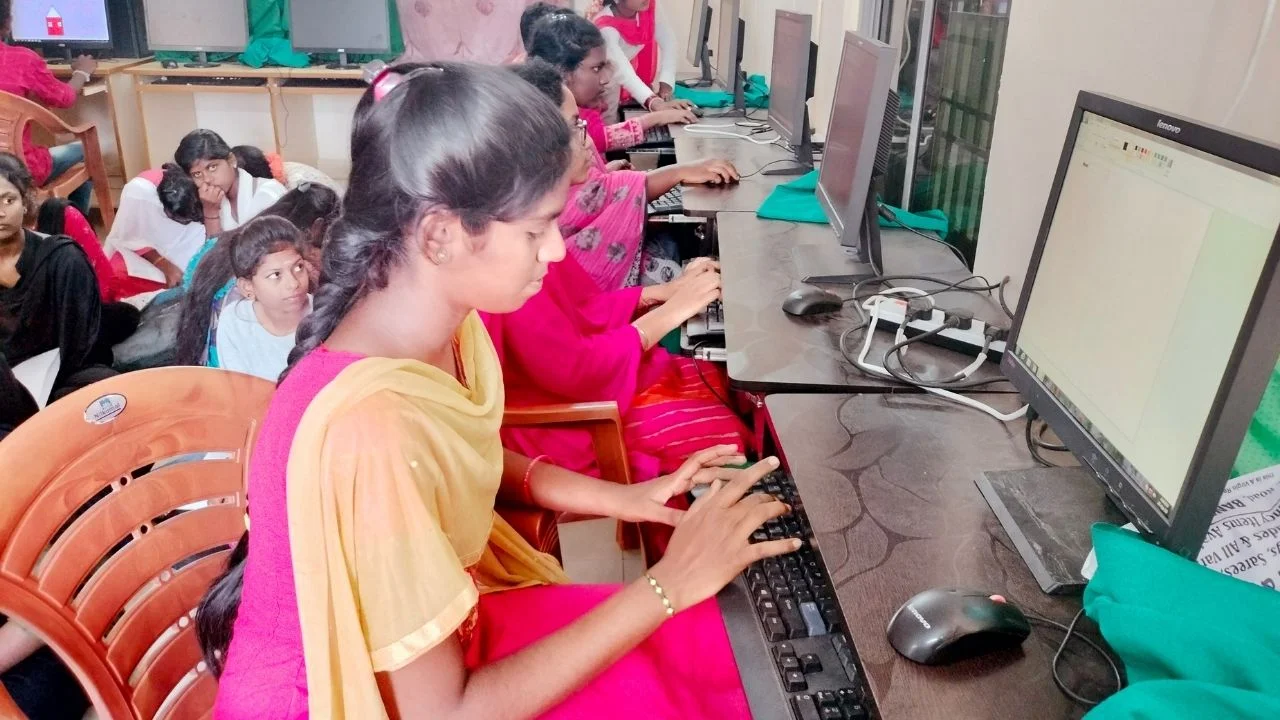
Child marriage has long been a devastating reality for girls in parts of rural India. In one remote tribal hamlet in Andhra Pradesh, girls as young as 13 were routinely married — not because families wished to harm them, but because harmful norms, poverty, and gender inequality left them with few alternatives. For generations, girls were valued only as future wives and mothers. Their choices, opportunities, and childhoods were taken from them.
“Before, I didn’t think I would ever be able to complete my education,” says 17-year-old Yuvachandhrika. “Many of my friends were married off young.”
As recently as 2018, every girl in this community was married before adulthood. While tradition played a role, the deeper drivers were economic insecurity, illiteracy, and the belief that marrying a daughter early was a family’s only path to survival.
Laying the foundation for change
Transforming this deeply rooted practice required patience, trust, and sustained engagement. Children Believe’s partner, ROPES, began by addressing urgent community needs: installing clean water systems, solar streetlights, safer roads, and supporting the introduction of public transportation to ensure girls could travel to school.
These practical improvements did more than meet basic needs — they built confidence in community-led development and created the foundations needed for deeper social transformation. Literacy programs strengthened adult education, and within only a few years, adult literacy rates rose by 80 percent, shifting attitudes toward the value of learning and the aspirations of girls.
“I was afraid I might be married off,” says 14-year-old Gangotri. “But now my parents support my education. I want to become a nurse and help my community. The village is different now. We talk about education and health openly, and we’re determined to change things for the better.”
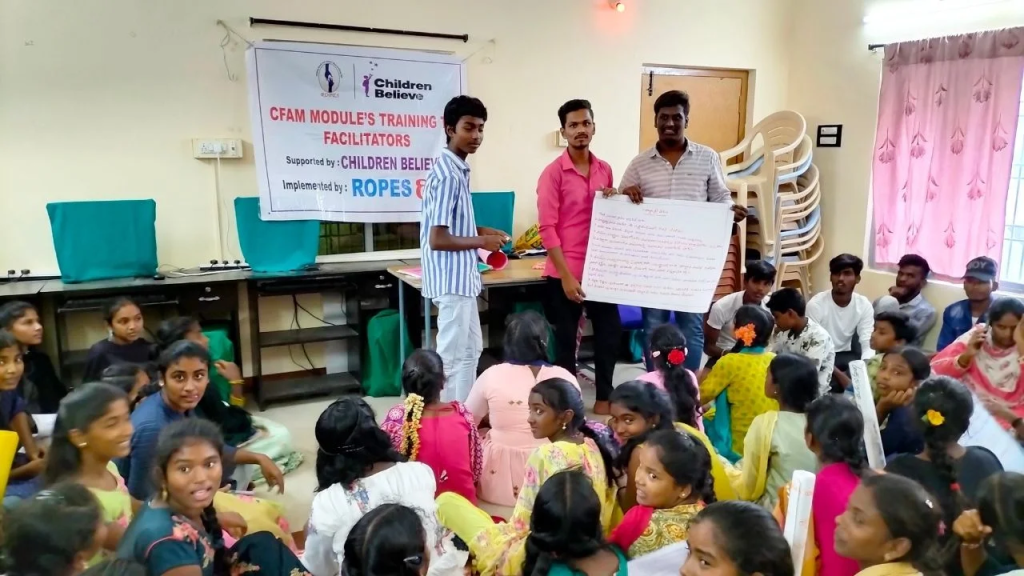
Youth leadership sparks a turning point
Alongside these improvements, ROPES introduced a child-friendly accountability program that empowered children and youth to advocate for their rights, challenge harmful norms, and engage directly with local leaders.
The impact was decisive: within one year, child marriage in the village stopped — and it has not happened again since. “Now, I am studying to become a teacher,” says Yuvachandhrika. “The change started with our youth group, and now we see the difference. No child in our village will marry early again.”
Today, the community is recognized as a regional champion for ending child marriage — a powerful example of how meaningful participation by young people can reshape long-standing norms.
Protecting girls’ lives and futures
Before this transformation, early pregnancy was nearly universal. Girls were expected to become mothers immediately after marriage, despite the severe risks to their health and survival. Maternal and infant mortality was alarmingly high. Adolescents faced miscarriages, stillbirths, and life-threatening complications.
Through awareness campaigns, strengthening of health services, and improved access to family planning, the community now understands the life-saving importance of delaying marriage and childbirth. Mothers and babies have access to safer birthing practices, postnatal care, and accurate information about their health and rights.
Village elder Venkatamma reflects on the shift: “I was married at a young age, and I thought that was normal. But now I see how education can change everything. My daughters were married early, but my grandchildren will have a better future. Education is the key.”
A community transformed
The end of child marriage in this village did not come from one intervention alone. It emerged from a holistic, community-driven process: improved services, strengthened education, empowered youth, and a shared commitment to protecting children’s rights.
The results demonstrate a powerful truth — when communities lead, and when girls are given voice, knowledge, and opportunity, generational change becomes possible.
This village is proof that ending child marriage is not only achievable — it is within reach when we invest in children, trust communities, and commit to lasting, systemic change.
ChildFund Alliance and its members are committed to building a world where every child is safe and protected—from violence at home, in communities, in schools, online, and during crises, including those driven by climate change. Learn more.