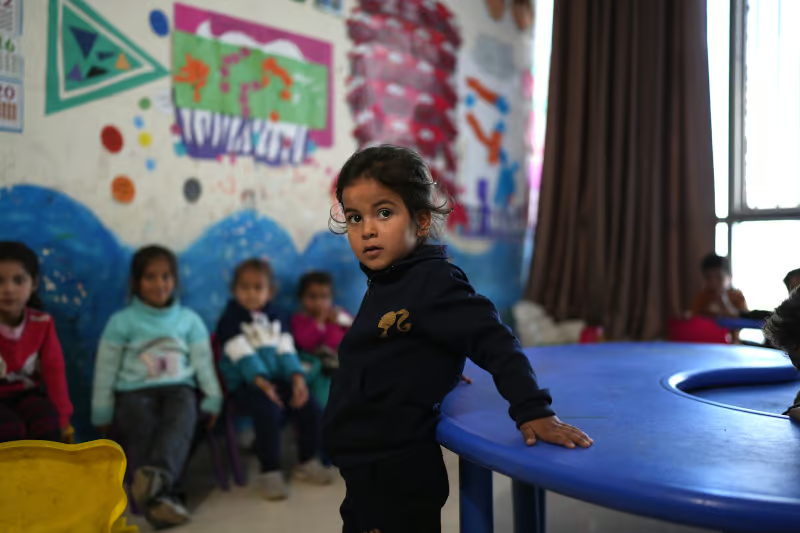
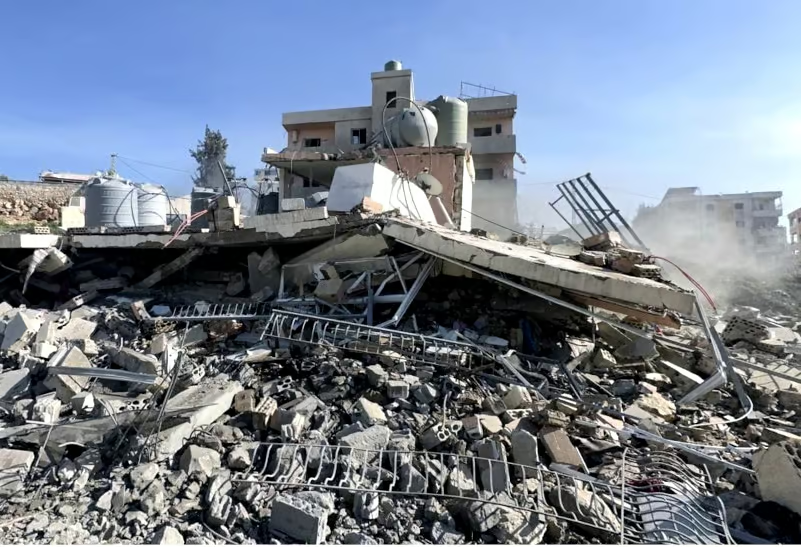
Children in Lebanon are once again paying the price of conflict. As war and insecurity intensify, families are being forced from their homes, daily life is being disrupted, and children’s safety, wellbeing and education are under growing strain.
More than 1.5 million children in Lebanon are in need of humanitarian assistance, and around 300,000 children have been displaced by the war. For many, the consequences go far beyond losing their homes. They are also losing access to the routine, support and protection that children need to feel safe and continue learning.
Schools disrupted, children unprotected
Insecurity and mass displacement have forced many schools to suspend in-person classes and move online. But for many children, online learning is not a realistic alternative.
Schools are not only places of learning. They also offer routine, supervision, social connection and a sense of stability during crisis. When those spaces are lost, children can quickly become more vulnerable.
“When schools close due to an emergency, online education seems like the obvious solution, but in Lebanon, the reality is very different,” said Damien Marquet, Educo’s Head of Humanitarian Response in Lebanon. “Many households lack devices, electricity is unreliable, and internet connectivity is poor, making online learning a highly unequal solution.”
Displacement is making learning even harder
For families displaced by the war, these challenges are especially severe.
Nancy, a teacher and mother of three, was forced to flee her home as violence escalated. She now lives in cramped conditions with several other families, with 12 children sharing the same house.
Before the conflict intensified, Nancy played an active role in supporting her children’s education. She helped with homework, maintained routines and encouraged them to make the most of every opportunity to learn. Now, those routines have been disrupted by overcrowding, insecurity and the sheer difficulty of daily life.
With several children trying to attend classes at once, often using a single phone or tablet in a noisy shared room, concentrating becomes almost impossible.
“They find it very difficult to concentrate,” Nancy explained. “Sometimes I literally ask my children not to log on to online classes because I know they won’t be able to concentrate. With so many children in the same room, all talking at the same time, it becomes overwhelming.”
Economic hardship is deepening the crisis
The war is also compounding the effects of Lebanon’s long-running economic crisis. Even before the latest escalation, many families were struggling to afford basic needs such as food, electricity and transport. Those pressures directly affect children’s wellbeing and ability to learn.
When households cannot access enough nutritious food, children’s development suffers. When families are living in overcrowded conditions without reliable electricity or internet access, staying engaged in education becomes even harder. For children already living through conflict, economic hardship adds another layer of instability and stress.
Children in Lebanon have now endured years of overlapping crises, including economic collapse, COVID-19 and conflict. The emotional toll is profound.
“Behind this situation are overwhelmed teachers adapting in record time, and emotionally exhausted children who have been studying for years amidst crises,” an Educo colleague said. “Each new disruption widens an educational gap that was already alarming, and the real risk is that it will become a generational wound.”
How Educo is responding
ChildFund Alliance member Educo, together with its local partner Basmeh & Zeitooneh, is supporting children and families affected by the crisis, including many from Syrian refugee communities.
Their response includes:
- delivering food and other basic necessities to displaced families
- distributing hygiene kits and essential items
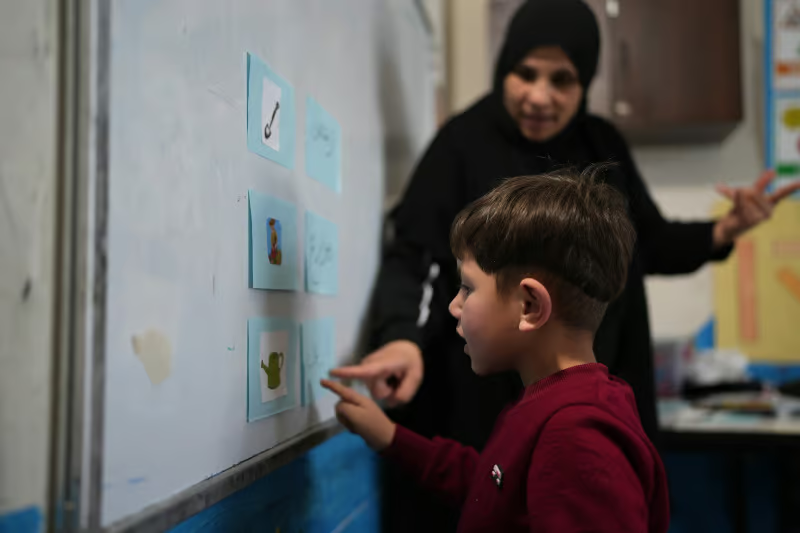
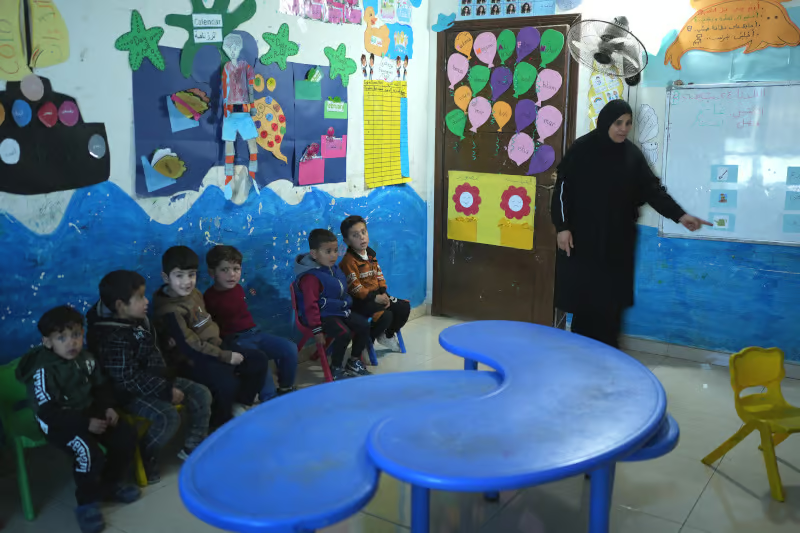
- creating safe spaces where children can feel protected
- providing emotional and educational support to help children cope
Educo has also strengthened its mental health, psychosocial support and safeguarding work. This includes psychological first aid, specialised support for more than 170 children and adolescents, and support and training for more than 180 caregivers to help them identify signs of distress and respond appropriately.
“The programmes have been adapted to go beyond academic content, since children in emergency situations need both emotional and educational support,” Damien said. “They now include social-emotional learning, stress management and resilience tools.”
The response also includes support for children and families facing gender-based violence, which often increases during emergencies and displacement. Overcrowding, the loss of support networks and the breakdown of community structures can all leave women and girls at greater risk.
Children need more than online learning
While online learning may provide a partial stopgap, it cannot replace the full role that schools play in children’s lives. Education is not only about lessons. For children affected by crisis, school can also mean protection, routine, trusted adults and a sense of normality.
In Lebanon, protecting children means looking beyond remote education and responding to the wider realities of war, displacement and economic collapse. These overlapping crises are shaping every part of children’s lives.
For ChildFund Alliance and our members, this is why humanitarian response must put children’s safety, wellbeing and rights at the centre. When schools disappear, children do not only lose learning. They lose stability, support and protection at a time when they need them most.