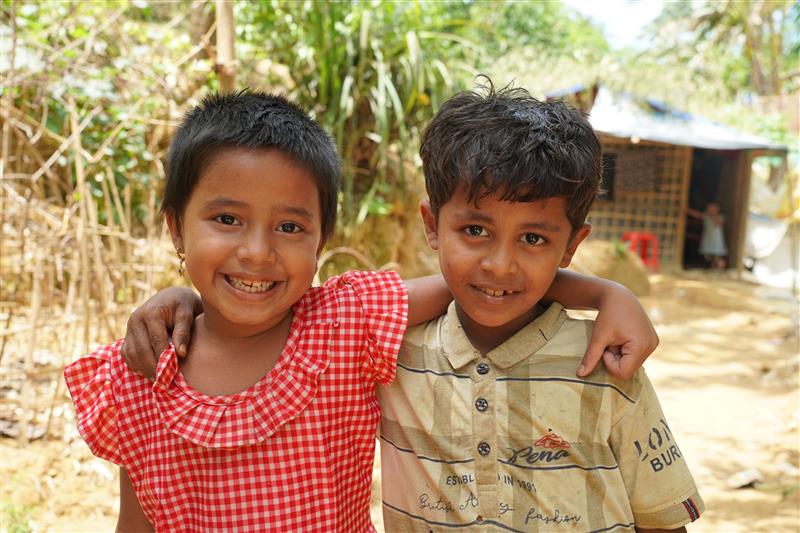
Following her recent remarks at the UN General Assembly’s 2025 High-level Conference on the Situation of Rohingya Muslims and Other Minorities in Myanmar, Sumi A. Shewly reflects on the ongoing humanitarian crisis in Cox’s Bazar and Educo’s work to protect and empower children and families caught in protracted displacement.
Once home to nearly three million Bangladeshi residents, Cox’s Bazar has seen its population surge by more than 30% since the start of the Rohingya refugee crisis. Today, over 1.2 million Rohingya refugees live across 32 densely populated camps — the largest settlement of its kind in the world. More than half of this population are children.
Each year, around 30,000 children are born in the camps, even as resources, space, and safety continue to dwindle. In recent months, an additional 150,000 people have arrived, compounding strain on already overstretched services.
Since 2017, more than 8,000 acres of forest have been cleared inside and around the camps to make way for shelters, infrastructure, and fuel. Security risks have intensified, and with no viable path to repatriation, the Rohingya remain stateless — officially recognised as Forcibly Displaced Myanmar Nationals (FDMN).
The Joint Response Plan
The 2025–26 Joint Response Plan (JRP) for the Rohingya Humanitarian Crisis brings together 113 partners, including Educo. It is jointly led by UNHCR and IOM, under the overall coordination of the Government of Bangladesh.
Despite an urgent appeal for nearly USD 100 million, only 35% of the required funding has been secured. Critical gaps remain in education (53%) and child protection (38%), threatening access to safe learning environments and essential support for children and families.
Educo’s work in Cox’s Bazar
Educo began its humanitarian response in 2018 and, since 2022, has served as an elected member of the NGO Platform Steering Committee for three consecutive terms, and was elected to the Refugee Operation and Coordination Team (ROCT) in 2025.
As a JRP partner, Educo delivers integrated programming across education, child protection, gender-based violence prevention, disaster risk reduction, and youth engagement. To date, it has established 65 learning facilities across eight camps in Cox’s Bazar and Bhasan Char, directly reaching more than 66,500 children and young people.
1. Education in Emergencies
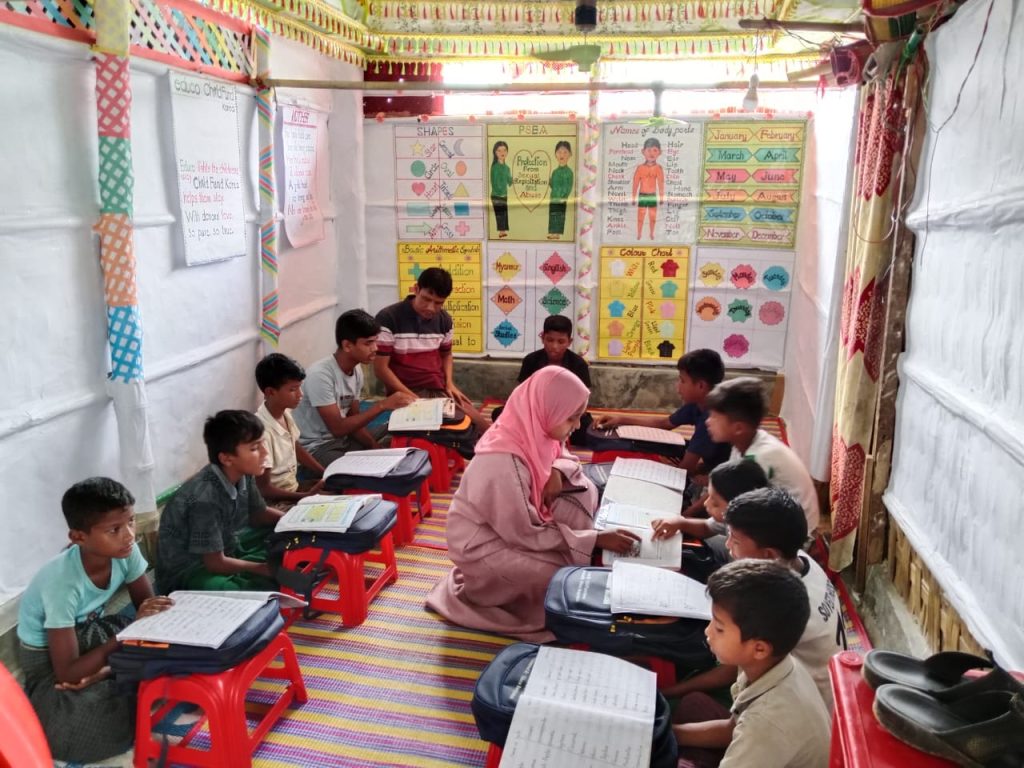
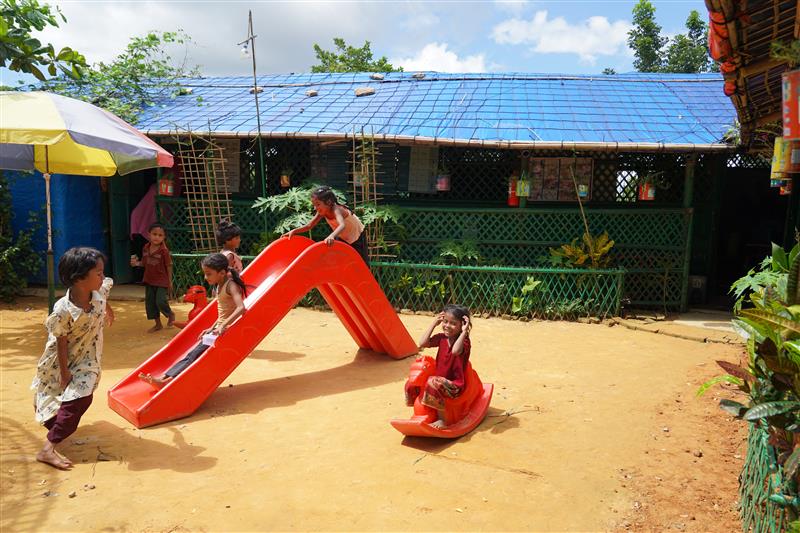
Educo’s Education in Emergencies (EiE) program ensures safe, inclusive learning through Early Childhood Education, Learning Centres, and Community-Based Learning Facilities. The program strengthens teaching quality, provides learning and recreation materials, and promotes parental and community engagement.
Positive parenting sessions equip caregivers with skills to create supportive home environments, while Social and Emotional Learning (SEL) helps children build resilience and empathy.

2. Child Protection in Emergencies
Educo operates Community Safe Spaces and Multi-Purpose Centres that provide secure environments for children and families.
The program works through Community-Based Child Protection Committees, Adolescent and Youth Clubs, and Women’s Support Groups to strengthen local protection mechanisms. Case management, referral services, and psychosocial support ensure that children and caregivers receive appropriate assistance, while life skills education and peacebuilding activities promote inclusion and community harmony.
3. Gender based violence prevention
Educo’s Gender-Based Violence in Emergencies (GBViE) programming focuses on prevention, response, and empowerment. Case management and referral services provide confidential survivor support, while capacity building initiatives promote women’s leadership and agency.
Male engagement activities encourage positive masculinities and shared responsibility for gender equality. Community awareness efforts address harmful norms, including child marriage, while Mental Health and Psychosocial Support (MHPSS) and Menstrual Hygiene Management (MHM) services safeguard the wellbeing and dignity of women and girls.
4. Disaster risk reduction (DRR) and climate change adaptation (CCA)
Educo’s DRR and CCA programming strengthens community preparedness and resilience to natural hazards and climate risks.
Communities develop and implement Risk Reduction Action Plans based on local risk assessments, supported by training and multi-hazard simulation exercises. Environmental initiatives address erosion and deforestation, while the distribution of life-saving and hygiene kits ensures families have access to essential supplies during emergencies.
5. Adolescent and youth engagement
Educo’s youth programs build leadership, vocational skills, and resilience among adolescents and young people. Training in climate change adaptation, homestead gardening, handicrafts, and sewing promotes sustainable livelihoods and self-reliance.
Market development and linkage initiatives help young entrepreneurs access local opportunities and strengthen community stability.


Operating realities in Cox’s Bazar
Educo continues to work in a highly complex and evolving environment. A sharp reduction in humanitarian funding has severely constrained the ability of organisations to maintain essential services for both refugees and host communities. At the same time, growing security tensions within and around the camps undermine safety and social cohesion.
Public health emergencies — including outbreaks of dengue, chikungunya, and malaria — further strain limited healthcare capacity. The continuous arrival of new Rohingya refugees adds to the pressure on infrastructure, services, and humanitarian systems.
Environmental degradation and the increasing effects of climate change, such as flooding and soil erosion, continue to threaten shelter, sanitation, and livelihoods. Rapid shifts in the camp context require constant adaptation of program strategies and delivery methods, while many communities still lack reliable access to safe drinking water — a persistent and serious public health concern.
Looking ahead
Despite the challenges, Educo remains steadfast in its commitment to protect, educate, and empower Rohingya children and families — while strengthening resilience within host communities.
Through its integrated approach to education, child protection, gender equality, and youth engagement, Educo continues to create pathways to safety, learning, and opportunity in one of the world’s most challenging humanitarian settings. Every day, our teams in Cox’s Bazar work alongside communities to uphold children’s rights, restore dignity, and build the foundations for a more hopeful and resilient future.
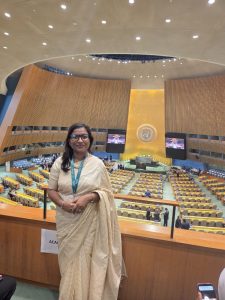
Watch Sumi speaking at the UNGA 2025 High-level Conference on the Situation of Rohingya Muslims and Other Minorities in Myanmar.