
WeWorld’s new report outlines how humanitarian programming can confront deep-rooted gender disparities and strengthen long-term resilience.
The ongoing, mass-scale invasion of Ukraine has triggered one of the most complex and rapidly evolving humanitarian crises in recent history.
In this volatile and high-stakes context, working in the humanitarian sector demands more than the provision of basic services; it calls for a principled, people-centred approach grounded in the dignity, rights, and diverse needs of those affected. At WeWorld, this ethos guides every aspect of our response. Our commitment goes beyond logistics; it means listening closely to the people whose lives have been upended by war, recognizing their specific experiences, and upholding their humanity, even in the harshest of circumstances.
A disproportionate burden on women and girls
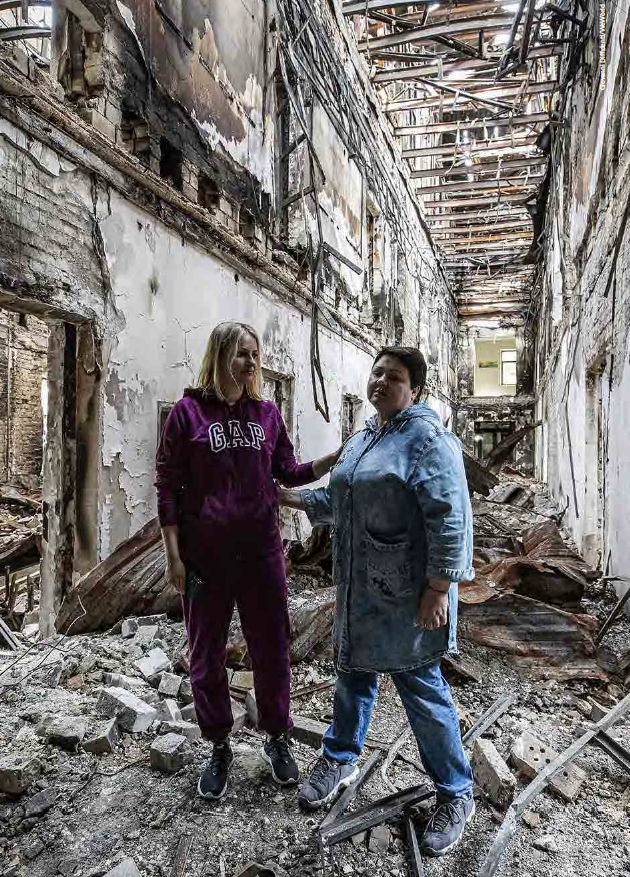
As with many humanitarian emergencies, this crisis has had a disproportionate impact on women, girls, and other marginalized groups. The widespread destruction of critical water, sanitation, and hygiene (WASH) infrastructure has deepened daily hardships for many.
However, the burden falls most heavily on women and girls, whose caregiving roles and physiological needs render them especially vulnerable in the absence of safe, accessible, and adequate WASH services. Displaced women are frequently confronted with severe shortages of clean water, menstrual hygiene supplies, and healthcare; conditions that heighten health risks, including those related to maternal and child well-being.
These urgent needs are compounded by a troubling rise in gender-based violence. Many women and girls face heightened threats at checkpoints, shelters, and service delivery points, often in the absence of safe, confidential, and trauma-informed support services. The breakdown of protective systems has laid bare the vulnerabilities already present in society and exacerbated by war.

Structural inequality beneath the surface
Yet beneath these immediate and visible harms lie long-standing structural gender inequalities. In Ukraine, women—especially those with disabilities, elderly women, women-headed households and those living in rural or conflict-affected regions— continue to face systemic barriers to employment, mobility, leadership, and participation in decision-making. The war has further entrenched these inequities, underscoring how deeply gender disparities are embedded in both social norms and institutional frameworks.
Despite this reality, many humanitarian interventions, including WASH programmes, remain limited to gender-sensitive or gender-aware approaches. While these efforts recognize gender differences, they often fall short of challenging the root causes of inequality. This is where gender-transformative programming becomes essential.
Women’s leadership in humanitarian response
A gender-transformative WASH approach not only responds to the differentiated needs of women and men but actively seeks to shift harmful power dynamics, dismantle discriminatory norms, and promote gender justice. It means centering women’s leadership, ensuring meaningful participation in all phases of emergency and recovery planning, and creating systems that foster equitable access to services.
In Ukraine, women have shown remarkable resilience and leadership, from grassroots defence networks to frontline humanitarian action. However, their contributions are too often undervalued or overlooked within formal response structures. Recognizing and building upon this leadership is not only a matter of equity; it is essential to the effectiveness and sustainability of WASH interventions.


Recovery as an opportunity for transformation
WeWorld’s research –Her Future at Risk:The Cost of Humanitarian Crises on Women and Girls– was developed to critically examine these dynamics and offer concrete pathways for making humanitarian WASH programming in Ukraine more inclusive and gender transformative.
Drawing on both a comprehensive review of existing data and new field research, it seeks to illuminate the current challenges and identify urgent gaps in the humanitarian response. It does so with a forward-looking perspective, recognizing that rebuilding WASH systems is not just a technical endeavour, but an opportunity to transform entrenched inequalities.
Recovery efforts must be more than restoring pre-war conditions. They must seek to create more inclusive, equitable, and resilient systems: ones that meet the diverse needs of all people, and that specifically empower women and marginalized groups. Integrating a gender-transformative lens in WASH recovery not only enhances the quality of services delivered but contributes to broader social change by challenging the status quo and promoting agency and voice.
It is also crucial that the international community maintains sustained attention to Ukraine amid competing global crises. The situation here reflects a larger pattern: when gender is not deliberately addressed, humanitarian emergencies tend to deepen existing inequalities. Conversely, when responses are intersectional, inclusive, and gender-transformative, they have the power to promote justice, resilience, and long-term recovery.
Towards inclusive and resilient systems
At WeWorld, we believe that providing essential services with respect for dignity and individual choice is a vital foundation but not the end goal. True support for affected communities means actively working to change the social and power structures that perpetuate inequality. This requires intentional strategies, ongoing reflection, and strong partnerships with local actors, especially women-led and feminist organizations.
This study represents a step in that direction. It offers evidence- based recommendations to support the design and implementation of WASH interventions in Ukraine that are not only responsive but transformative. By placing gender equity at the heart of humanitarian programming, we hope to strengthen both immediate response efforts and longer-term reconstruction. Our goal is clear: to contribute to a future where recovery is not just about rebuilding systems, but about reimagining them to be just, inclusive, and truly resilient.
Read WeWorld’s report: Her Future at Risk