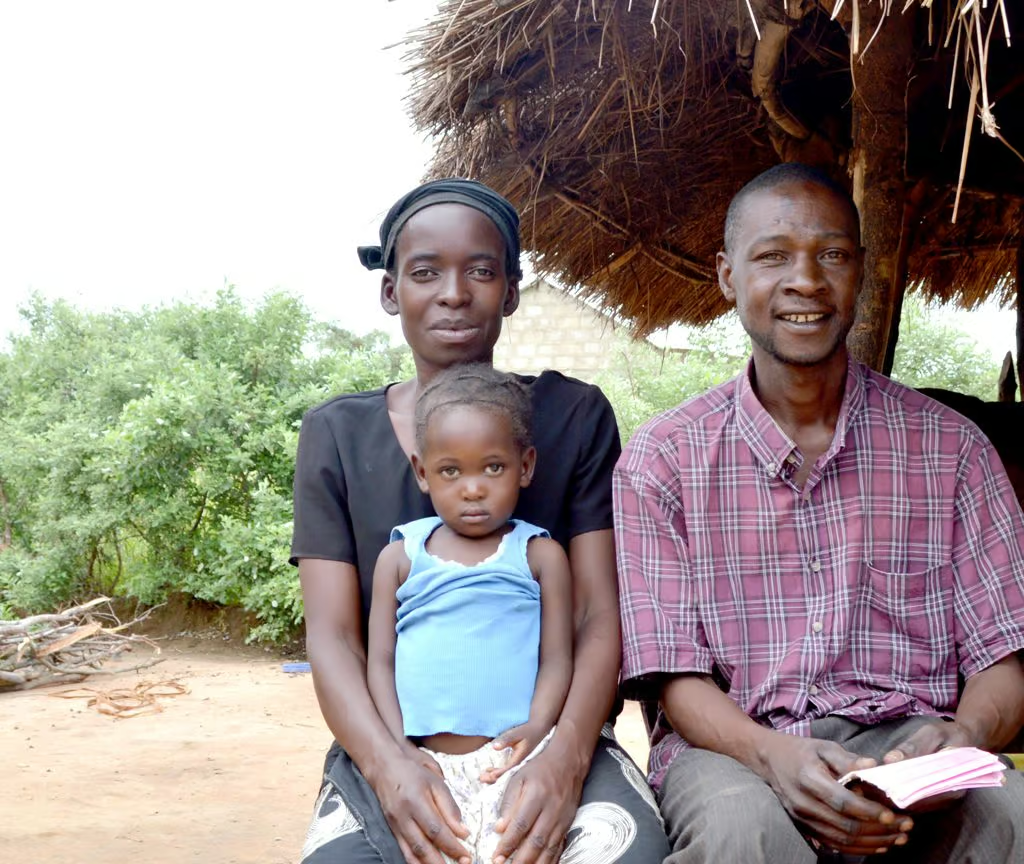
Lily* is a two-year-old full of energy and surrounded by love. She’s the youngest of five, enjoys playing and spending time with her family in Lusaka Province, Zambia. But her journey to health hasn’t been easy.
Lily’s parents, Frida and Costern, work tirelessly, but their income – less than AU$3 a day – barely covers the basics. With limited resources, they have struggled to provide enough food for their family. The result? Food insecurity, malnutrition and devastating health complications for Lily.
What does child malnutrition look like?
“I was so worried I might lose her,” says her mum, Frida. When Lily was born, she weighed a healthy 3kg. But as Frida’s own nutrition suffered from food shortages, her ability to breastfeed properly weakened. With no access to better nutrition or supplementary feeding, Lily’s health quickly deteriorated.
“We had very little to eat,” says Frida. “It was mostly nshima (cornmeal porridge), some vegetables, and occasionally small, dried fish.”
Without a diverse, nutrient-rich diet, Lily developed micronutrient deficiencies, weakening her immune system. By eight months, she was losing her appetite and no longer gaining weight as she should, and her energy levels had plummeted. These are all signs of severe undernutrition, a form of malnutrition where a child does not receive enough of the right nutrients to grow and develop.
Understanding malnutrition and undernutrition
The terms “malnutrition” and “undernutrition” are often used interchangeably, but they refer to different things.
Malnutrition is where a person’s diet is either lacking in essential nutrients, contains too much of certain foods, or is imbalanced in some way. It can result in both undernutrition (not getting enough nutrients) and overnutrition (getting too many nutrients, often in the form of excess calories).
Undernutrition is a type of malnutrition, specifically referring to a deficiency in calories, protein, and/or essential vitamins and minerals. People who are undernourished don’t get enough of the nutrients they need to stay healthy and grow properly.
When children experience undernutrition, they become vulnerable to:
- Stunting: when children don’t grow tall enough for their age due to a lack of nutrients.
- Wasting: when a child’s weight is too low for their height, often due to severe lack of food or illness.
- Underweight: when a child’s weight is too low for their age or height.
- Micronutrient deficiencies: a lack of essential vitamins and minerals, such as vitamin A or iron, which can lead to serious health issues.
Undernutrition can result from various factors like poverty, limited access to healthy food or illness. It’s a global issue that affects millions, particularly in low-income countries.
Undernutrition weakens the immune system, stunts growth and can lead to developmental delays in children. It also increases the risk of diseases and even death in severe cases.
By understanding the difference between malnutrition and undernutrition, we can better address the causes and work toward a healthier future for everyone, including children like Lily.
Support for Lily and her family
Lily’s weight had dropped to a dangerous 3.8kg from 5.1kg. “We barely had enough to eat,” Frida recalls. “Lily became weak, stopped crawling, and refused to eat.”
By eight months, Lily was visibly affected. Her immune system was compromised due to micronutrient deficiencies, and she was no longer reaching important developmental milestones. Her weight had dropped drastically, and her mum feared the worst.
“I was so worried I might lose her,” Frida says, capturing the heartbreak many parents of malnourished children experience.
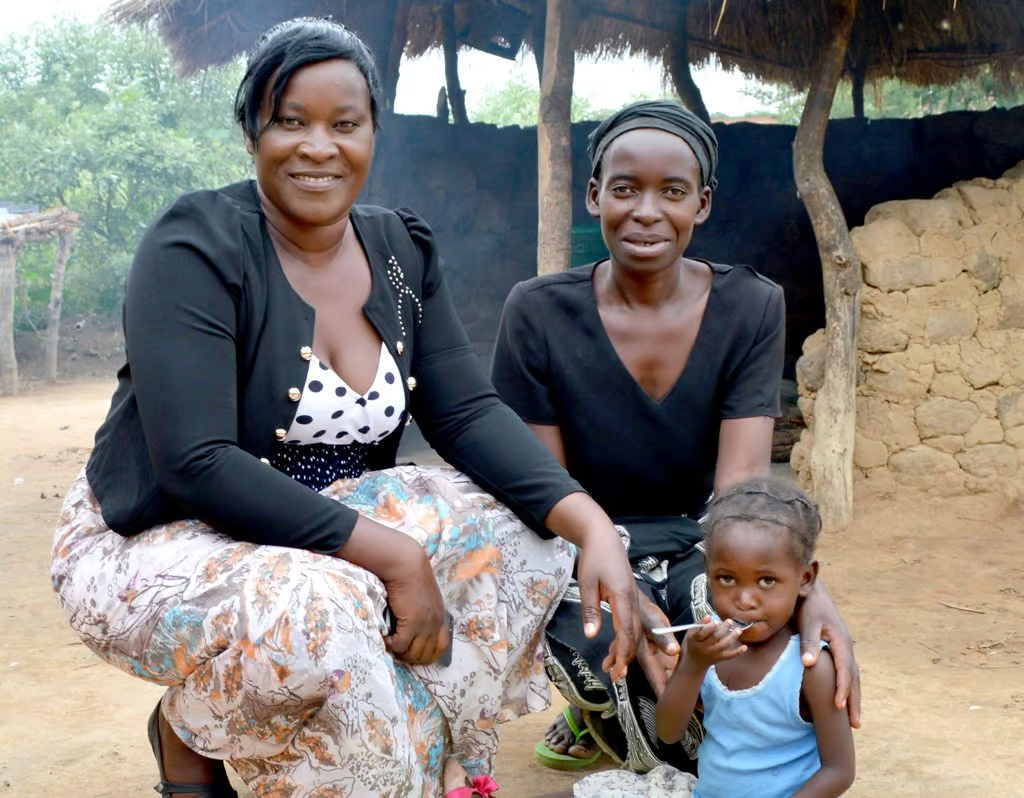
Frida, fearing for her daughter’s life, turned to her neighbour Mary, part of the Safe Mothers Action Group supported by ChildFund Zambia. Mary encouraged Frida to take Lily for a growth monitoring session at the local health clinic.
She was diagnosed with severe malnutrition and enrolled in a community-based treatment program. This included therapeutic peanut-based paste packed with essential vitamins and minerals – one of the most effective treatments for malnutrition in vulnerable communities.
The peanut paste is a type of supplementary food given to treat malnutrition, a frequent cause of death for children under the age of five.
Within a month of starting treatment, Lily gained just over 2kg. She continued the supplementary feeding program alongside a diet of cornmeal porridge and vegetables for another four months before returning to a stable and healthy weight.
“I was supposed to give Lily three bottles of the supplementary food a day,” Frida recalls, “but she could barely finish one. It took months, but as she started eating more, she began to improve.”
Today, Lily weighs almost 10kg and is a healthy, happy toddler. “Lily is doing much better now,” Frida says. “She’s eating well and plays a lot with her friends.” Her recovery is a testament to the power of early intervention, proper nutrition and community support.