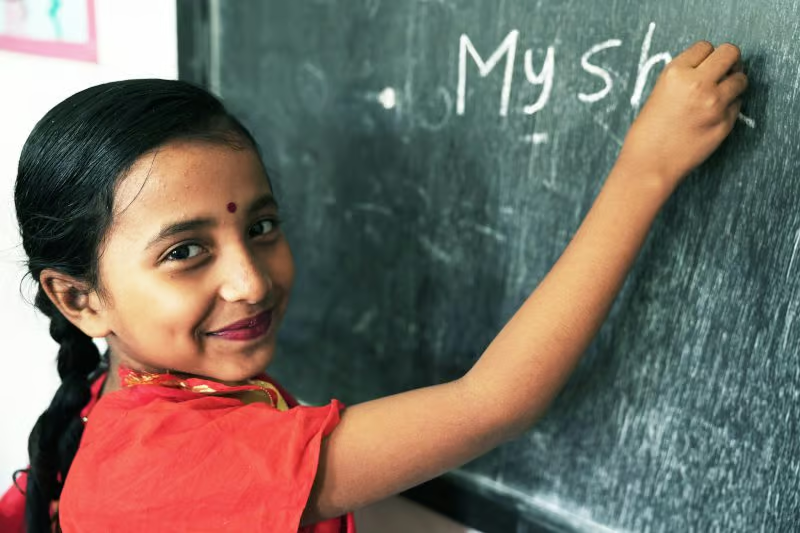
“When I worked in the shoe factory, I had to use a sharp knife to trim the excess parts. I often cut my hands or fingers, and it hurt terribly. I even had trouble eating with my own hands.”
This is what thousands of childrenlike Maisha experience every day when they have to work to support their families in jobs that put their lives or health at risk. Child labor remains a major problem in Bangladesh because, despite efforts to eradicate it, nearly 3.5 million children are still working. Of those, nearly 1.5 million are employed in places where their lives are at risk.
Dangerous work for children
The jobs in which children are employed are mainly transport, domestic work, car repairs or garbage collection. They generally work long hours—an average of six hours a day—for minimal pay, enduring working conditions that cause many health, psychological and social problems.
Many of these children have never attended school or been forced to drop out early, and the educational or vocational training facilities in the areas where these working minors live are very poor.
Maisha and the shoe factory
Maisha is 10 years old and studying at school. But it hasn’t always been this way.
Her family had to move to Dhaka because their home village was submerged by the flooding of the Padma River. In the Bangladeshi capital, her father found work as a painter and her mother as a domestic worker, providing the family a brief period of stability.
But misfortune struck again. Maisha’s mother was in a serious car accident, resulting in head trauma, memory loss, and behavioral changes. Unable to care for herself or her family, Maisha’s father quit his job to take care of his wife and daughters.
To make ends meet and cover medical expenses, Maisha and her older sister began working in a shoe factory. Their daily routine was gruelling: they worked long hours, ate little, and only enjoyed one day off a week, which they used to exercise.

An opportunity that changed everything
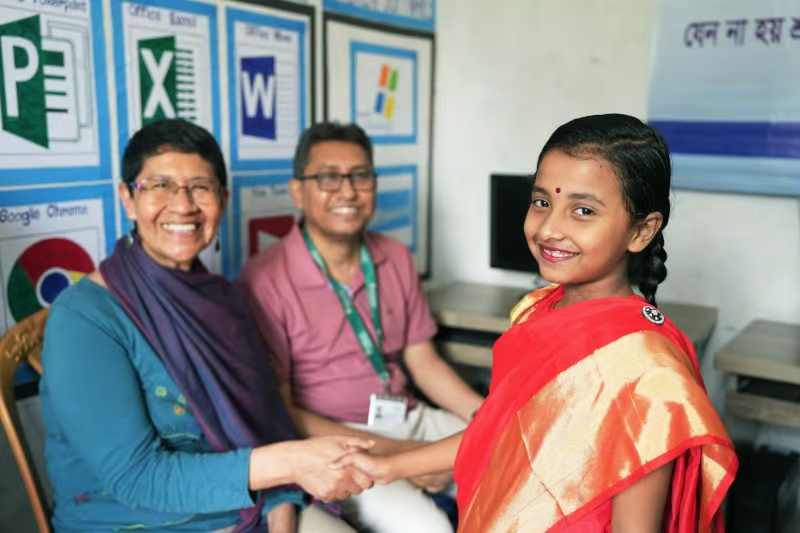
Educo’s team in Bangladesh visited Maisha at the shoe factory where she worked. After speaking with her parents and the factory owner, they convinced her family to enrol her in school.
Maisha entered as a first grader and expressed her desire to stop working and focus solely on her studies. Her teachers explained to her parents the dangers Maisha faced at work.
Encouraged by the teachers, Maisha’s mother resumed work as a domestic worker, despite her poor health, allowing Maisha to leave the factory. “My life has changed a lot since I started school. I don’t have any other job; I just focus on sports and studying,” little Maisha tells us with a smile.
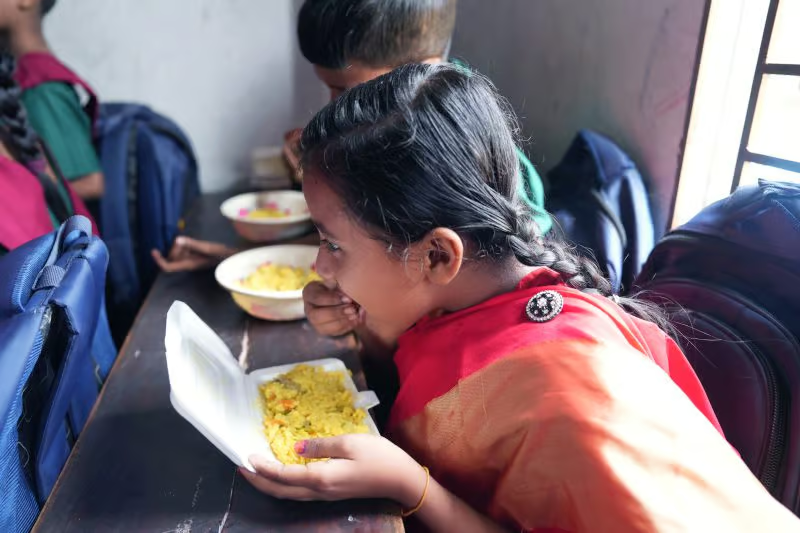
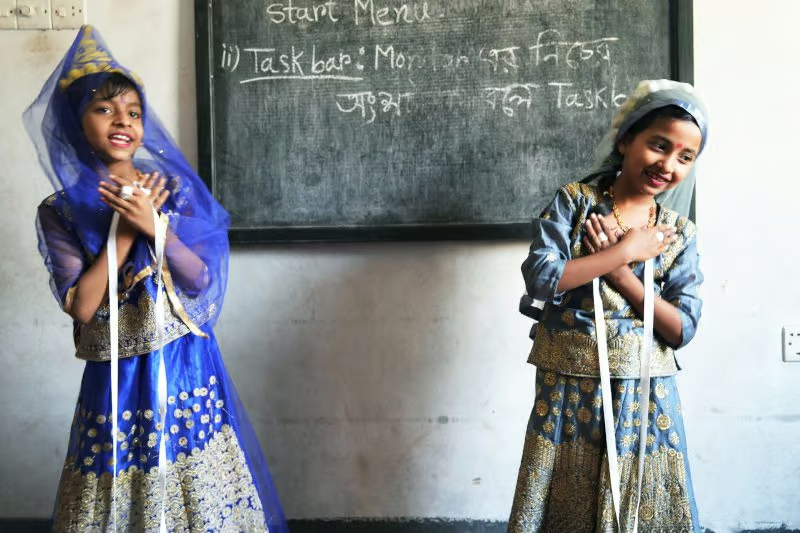
Now in third grade, Maisha enjoys a school life full of studies, sports, dancing, and singing. Her teachers keep her parents informed of her progress.
Maisha dreams of becoming a doctor and changing the system because she believes everyone should be treated for free when they’re sick. Furthermore, she says: “No child should grow up without the love of their parents.”
Her father is willing to do everything possible to help her achieve her dream: “I will make sure my daughter becomes a great doctor. Every day I strive to make my little girl’s dreams come true.”
Education is a fundamental right that enables all other rights, well-being, and a dignified life for children. That’s why Educo works to ensure that children in the most vulnerable situations can access and remain in quality formal and non-formal education systems.