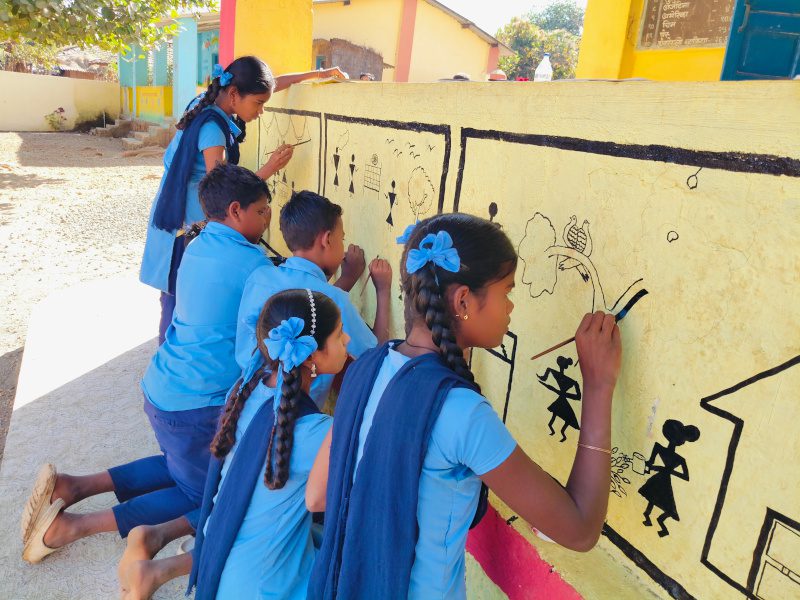
The children of Bandhghar village in Maharashtra, India come from a range of indigenous ethnic groups. Families are reliant on agriculture, but the impact of climate change has forced many to migrate to nearby towns in search of job opportunities.
Not only do the children suffer disruption due to this forced migration, but they face a host of challenges, including the fact that their local schools lack adequate infrastructure. Many cultural norms also pose a threat to their wellbeing, with gender discrimination and early marriage having a significant impact on girls.
Giving young people a voice
For more than 10 years, ChildFund Alliance member Educo has been working in the villages of Palghar, in partnership with local organisation Matru Schaya Social Welfare Society. Their focus is on strengthening children’s capacity to advocate on their own behalf and giving them a range of platforms to share their ideas and concerns.
Children’s Parliaments have proven to be very effective in this region. In the village of Astea, children requested a bus so they could get to school on time and were successful. Educo also trains teachers, parents, elected representatives and government officials to effectively address the needs and concerns of children.
Expression through art
Warli art, or the tribal art of Maharashtra, is an ancient type of pictorial art that first appeared around 3000 BC. It has traditionally been used to decorate the walls of houses and was only practiced by women. Traditionally, Warli artists use their mud huts as a backdrop for their paintings, similar to how ancient people used cave walls as canvases.
This year, Educo launched the Art for Children’s Rights project, a unique initiative which combines indigenous Warli art with children’s rights and well-being. Children learn to understand their rights, especially in their local context, and Educo helps them identify problems that threaten their safety or health in their school and village. They also learn how to raise these problems with the adults responsible for their immediate environment.
More than 30 children from the Bandhghar public school took part in an 8-days of training in drawing and mural painting. Children learnt how to identify the rights they enjoy, as well as the issues that prevent them from exercising their rights.
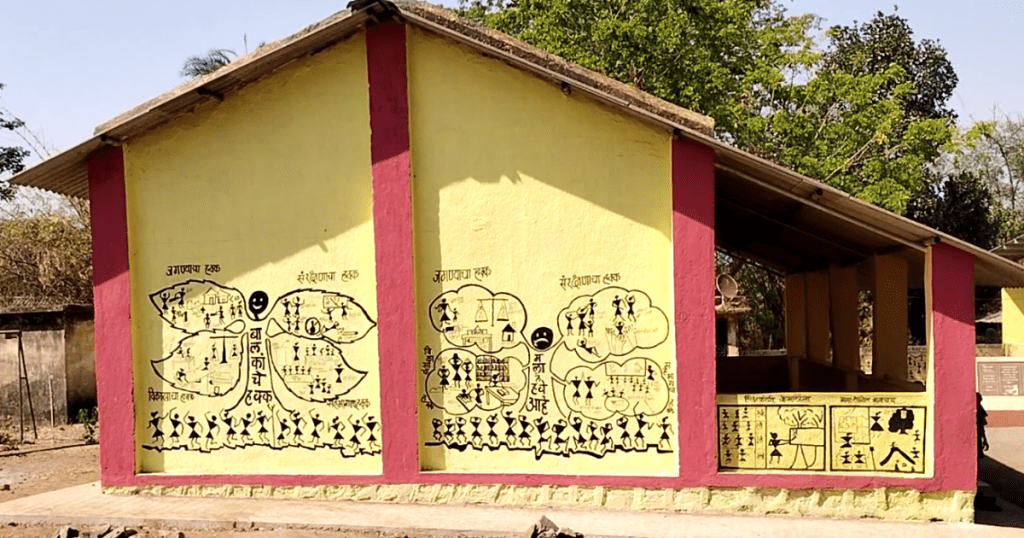
After six days, Manjari Art and Culture Foundation artist trainers Manasi Gawade and Hitendra Gawade helped the children translate what they had identified in the first two days into Warli art forms. They first practised on paper and, once they felt comfortable, drew the Warli forms and text on the front walls of the school.
The final drawing represented the rights of children in India as enshrined in Indian law and the rights recognised in the United Nations Convention on the Rights of the Child.
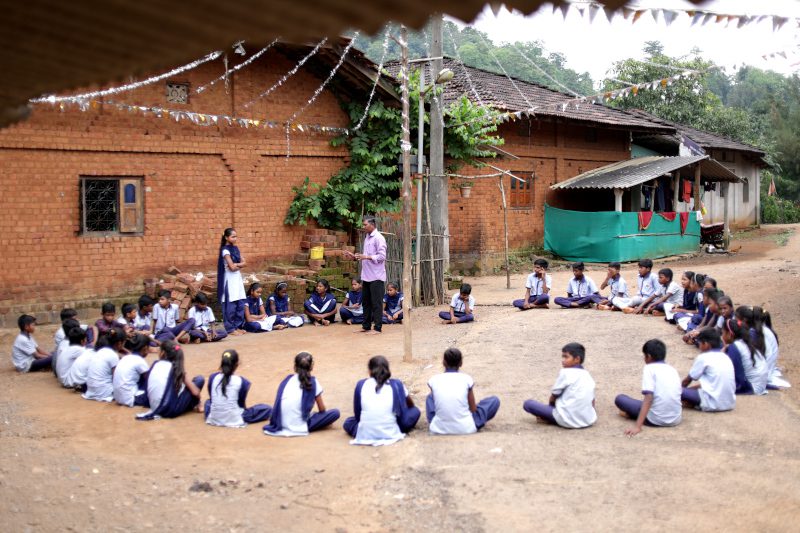

A focus on the challenges faced by young people
In addition, the children highlighted various issues they see in their local region: child marriage, discrimination, school dropouts, excessive use of mobile phones by children, or unhygienic conditions at school and in the neighborhood.
The process was unique as the boys and girls discussed among themselves which topics to prioritise and highlight. Yuvraj, a 7th grade student, tells us what he has learnt from the workshop: “My group has shown the practice of discrimination through our painting. In this painting, the parents give an ice cream to the boy, but do not give it to the girl. This is common in families, but in our class we have learnt that it should not happen. I enjoyed the activity of drawing on the walls with my friends and learning about our rights.”
A learning experience for the entire community
The initiative also raised the curiosity of teachers and community members. Bandhghar is the main school in the village so the mural painting has sparked much interest among the principals and teachers of other schools in the area, who are keen to see the same initiative conducted in their own schools. Moreover, it has generated debate among people in government positions on issues affecting children.
Saraswati Janu, a worker at a rural childcare centre in the village, watched the children participating in the activity and loved the idea: “I really like the drawings that the children have made. Children under 6 who attend my centre can also see these paintings and understand the basic message, like keeping the premises clean or using mobile phones less.
“This workshop is unique and combines indigenous art with children’s rights. More children should learn this,” she tells us.
Educo is determined to continuing innovating with initiatives like this that have a local focus and address the problems that children face directly. This way of educating children and adults, which does not represent a large economic investment, is respectful of the environment and is adapted to children. It is also very effective, engaging the whole community.