
ChildFund Alliance member WeWorld has been present in Afghanistan since 2017. It is a country experiencing one of the world’s most protracted, and often forgotten, crises, with almost 60% of the population (23.7 million people) requiring humanitarian assistance in 2024.
The context
Today, millions of people in Afghanistan face severe food insecurity, malnutrition, displacement and protection risks. At the same time, the country is also suffering from a severe economic downturn – which has led to the loss of livelihoods for millions of Afghans – and a restrictive political environment that violates human rights, particularly those of women and girls, and creates barriers to access and delivery of humanitarian aid.
Those who pay the highest price are the groups whose rights are most denied: women, especially those who have found themselves at the head of the family, having to provide for the support of their sons and daughters, without the right to work, earn an income or leave their home independently. This puts their access to food at risk, as the children who depend on them.
How WeWorld is supporting families
At the end of 2021, WeWorld focused its efforts on supporting women-headed families, most of whom were widowed or abandoned by their husbands. Since then, and in partnership with the Rural Rehabilitation Association for Afghanistan (RRAA), WeWorld has activated the Cash for Food program in rural areas of Herat province in north-western Afghanistan, reaching more than 500 families through the distribution of $80 per month for the purchase of food and basic necessities.
The program was supported by ChildFund Australia, ChildFund Korea, ChildFund Deutschland, Barnfonden and Taiwan Fund for Children and Families.
Fatima’s story
Fatima is a 37-year-old woman who lives alone with her three children in Robat-e-Sangi district. Two years ago, she lost her husband and found herself the head of her family, as well as the sole provider for her children.
She explains: “I have faced many difficulties since I found myself the head of my family. Every day I had to go and work in the neighboring houses to meet the needs of my children. Since I live in the village, and not in the city, most of the families are poor and can no longer afford to have someone to work at home.
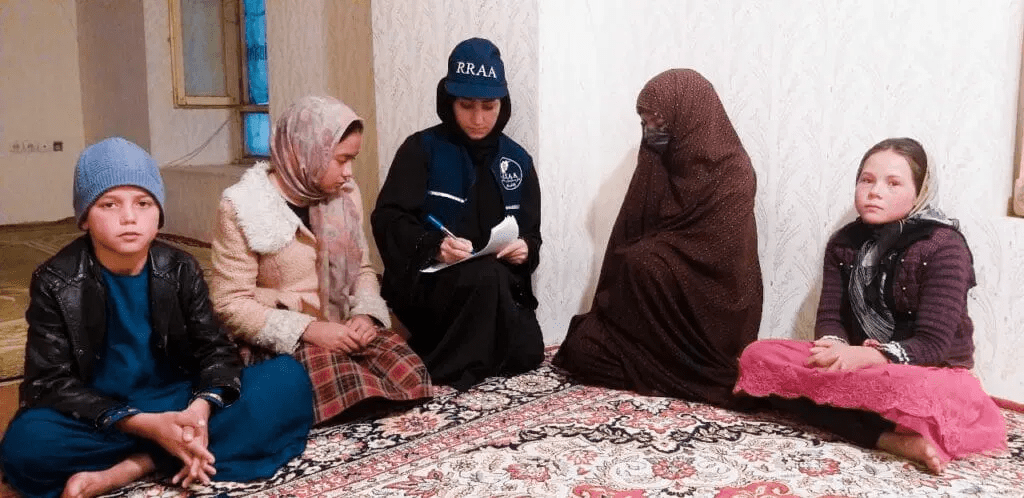
“It has become difficult to find a job or even travel to look for a job elsewhere. In my house there was no food to feed my children three times a day like a normal family and in the evening, we ate bread with tea, without any sweets: at least the piece of bread saved our lives.
“Both my children and I are happy to have been selected as direct beneficiaries of this project. I was able to provide food for my children and other small needs of my family thanks to the money I received; it was really a great support, which made my children and myself safe, given the difficult conditions we found ourselves in.”
Manizha’s story
Manizha has a similar story of resilience and struggle, where WeWorld’s support came at a time of great hardship. As just 22 years of age, Manizha has had to support her entire family.
“I realized that I couldn’t live an ordinary life like other people my age. I couldn’t allow myself to have great aspirations. I realized that I couldn’t live my youth like others and that I had to be content with breathing to support my family.
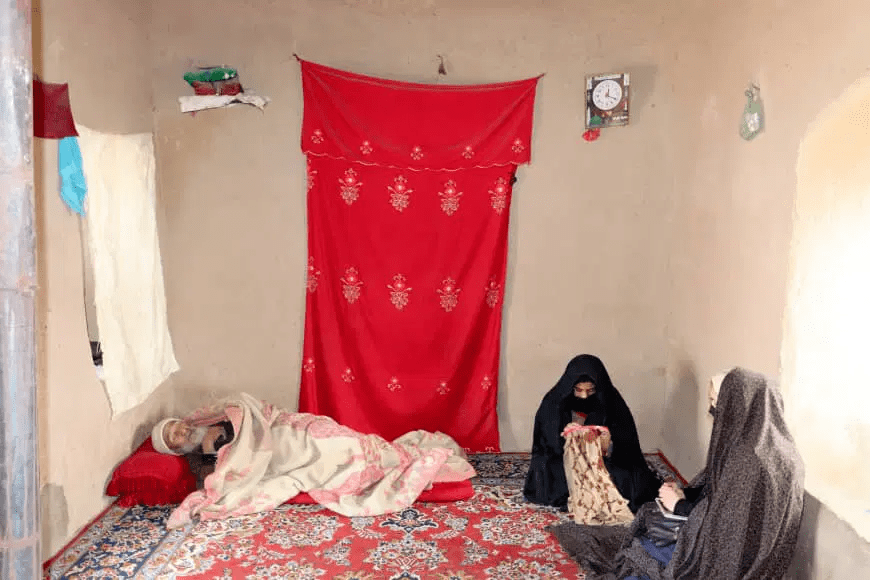
“Our house was dark and cold from the beginning, but the earthquake made things worse. A house without doors and windows, where we burned in the summer and froze in the winter. When aid arrived at our house, one of the workers said: “These have survived a lot….
“Thank God, our living conditions have improved. For a few months I did not worry about the cold winter nights because, with the money I received, I bought warm clothes and heating material for myself and my family.
“I am grateful that this assistance saved my life and that of my family; otherwise, during this winter and given the conditions of our house, we would not have survived.”
Earthquake response
In addition to its cash assistance programs, WeWorld also delivered emergency aid following the earthquake in Herat which left more than 100,000 people in need of water, food, and other resources.
WeWorld supported families through a cash assistance program, ensuring people could purchase food and non-food items, such as blankets and clothes. These are essential during the winter months, when extremely low temperatures further compromise the ability of families to access to basic goods and services.
Learn more about WeWorld and its work in Afghanistan.